PUBLIC AFFAIRS · CONTEXT · PERSPECTIVE

THE DAILY BRIEFING

Today’s Top Headlines

The story, the facts & why it matters.

LATEST EDITION
Daily Headlines/3-minute read

Iran Offers Two-Day Path to Reopen Strait of Hormuz, but U.S. Agreement Remains Unresolved

On November 2, Iran said its proposed sequence for reopening the Strait of Hormuz could be compressed into two days if Washington accepted Tehran’s demands, including ending the U.S. naval blockade. Iranian negotiators had left Doha on Sunday; an official briefed on the mediation said a draft proposal was circulating and further talks were possible. The strait has not reopened under a new agreement, and there is no confirmation that the United States has accepted Iran’s conditions. The dispute matters because the maritime route affects energy supplies and regional security.

Read the article
Browse All Daily Headlines

EXPLORE THE RECORD

The article library

Find a story. Follow a subject. Come back for the context.

155 articles
Daily Headlines

Democrat Haley Stevens Endorses Republican Mike Rogers in Crucial Michigan Senate Contest

Michigan Democratic Representative Haley Stevens endorsed Republican Mike Rogers for the U.S. Senate on November 1, two days before an election against Democratic nominee Abdul El-Sayed. Stevens had lost the party primary to El-Sayed and had previously pledged support. She cited disputes over campaign rhetoric and a planned unity appearance; El-Sayed’s campaign and other Democrats challenged her account and criticized the reversal. The race for retiring Senator Gary Peters’s seat could affect control of the Senate, but the impact of Stevens’s endorsement on voters remains unknown.

3 min read
Daily Headlines

Drone Attacks Deepen Sudan’s Power Crisis, Threatening Hospitals and Water Supplies

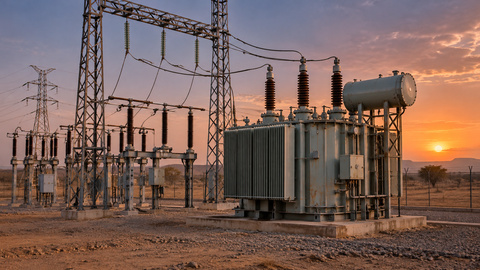
Drone attacks on electrical substations in Sudan have cut electricity to communities in northern and eastern states. Strikes on November 1 disabled facilities in Al-Dabbah and Abu Hamad; local sources reported additional November 2 attacks in Aroma and New Halfa. Sudanese rights group Emergency Lawyers says approximately 15 substations have been targeted since early October. Sudanese authorities blame the Rapid Support Forces (RSF), but responsibility for each strike should remain attributed rather than treated as independently proven. Hospitals, water pumps, food systems and agriculture face serious disruption.

3 min read
Daily Headlines

False Nuclear Alerts Spread After Emergency Apps Are Hacked in Ukraine and Russia

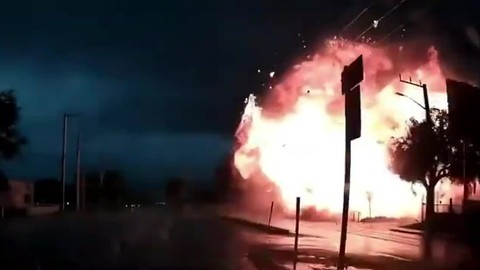
Late November 1 and early November 2, public emergency-warning mobile applications in Ukraine and Russia distributed false alerts about nuclear or radiation danger after separate reported cyberattacks. Ukrainian users saw warnings about radiation, chemical threats and street fighting; officials said there was no such radiation emergency and temporarily suspended the affected app before restoring it. Russia’s Emergency Situations Ministry also reported false notices through its app while saying other alert channels continued operating. No verified evidence connects the attacks or establishes a perpetrator.

3 min read
Daily Headlines

Iran Offers Two-Day Path to Reopen Strait of Hormuz, but U.S. Agreement Remains Unresolved

On November 2, Iran said its proposed sequence for reopening the Strait of Hormuz could be compressed into two days if Washington accepted Tehran’s demands, including ending the U.S. naval blockade. Iranian negotiators had left Doha on Sunday; an official briefed on the mediation said a draft proposal was circulating and further talks were possible. The strait has not reopened under a new agreement, and there is no confirmation that the United States has accepted Iran’s conditions. The dispute matters because the maritime route affects energy supplies and regional security.

3 min read
Daily Headlines

Separate Halloween Weekend Shootings Leave Deaths and Dozens of Injuries Across U.S.

Shootings during the Halloween weekend left people dead and dozens wounded in multiple U.S. cities. In Dallas, police reported four deaths and at least 15 injuries across three separate incidents in the Deep Ellum entertainment district early November 1; officials said there was no information showing those shootings were related. An Associated Press roundup on November 1 counted at least six deaths in its then-identified incidents, while a broader CNN tally on November 2 reported more than a dozen deaths and over 90 injuries. Those totals have different scopes and remain subject to updates, not a single official nationwide count.

3 min read
Daily Headlines

More than 52 million Americans have voted as Trump campaigns in closely contested Senate states

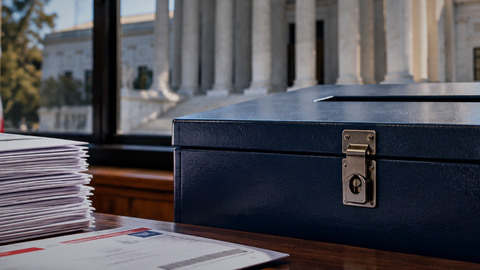
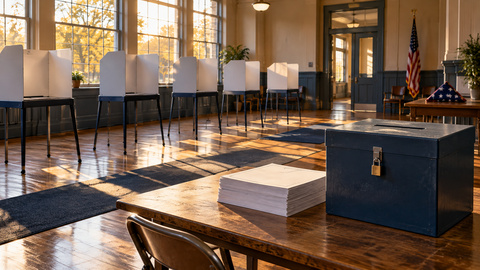
More than 52 million Americans have cast early votes in person or by mail, according to University of Florida Election Lab figures cited by Reuters on November 1. President Donald Trump is campaigning in Iowa and Kansas, historically Republican-leaning states where Senate races have tightened. All 435 House seats and 35 Senate seats are on the ballot November 3. Early voting totals describe participation, not how voters voted or who will win.

2 min read
Daily Headlines

Poland’s constitutional court crisis deepens after disputed suspension of tribunal president

Poland’s government backed a move to suspend Constitutional Tribunal president Bogdan Święczkowski, arguing he obstructed judges appointed by the parliamentary majority. President Karol Nawrocki and opposition figures dispute the legality of the action, while Prime Minister Donald Tusk says decisive steps are needed to restore lawful judicial independence. Demonstrators gathered outside the court, and police reported detentions after confrontations. The dispute rests on years of contested judicial appointments and competing interpretations of constitutional authority.

2 min read
Daily Headlines

Taiwan says Chinese coast guard patrols harass shipping east of the island

Taiwan’s Coast Guard says two Chinese coast guard ships patrolling off Taiwan’s eastern coast asserted jurisdiction through radio messages and that Taiwanese vessels monitored them. Beijing describes its operations as routine law enforcement in waters it claims. Taiwan rejects that claim and warns repeated patrols could serve to normalize restrictions on a maritime route essential to supply operations. These concerns are assessments, not proof of a planned blockade.

2 min read
Daily Headlines

United Nations demands investigation after staff member dies in Houthi custody in Yemen

The United Nations reported October 31 that Mohammad el Shami, an employee of its human rights office, died while held by the Houthi de facto authorities in Yemen. He had been detained since June 6, 2024. The UN says it received no proof of life during his detention and has no reliable explanation for his death. It demands an impartial investigation and the release of other detained personnel. The Houthis control Sanaa and much of northwestern Yemen, but are not Yemen’s internationally recognized government.

2 min read
Daily Headlines

United States reviews proposals for limited Black Sea shipping ceasefire

At the October 31 G20 foreign ministers meeting in Atlanta, Secretary of State Marco Rubio said the United States was reviewing proposals—particularly from Turkey and suggestions from India—for arrangements that could help safeguard Black Sea grain and energy shipments. Rubio characterized the diplomatic climate as growing interest, not momentum toward a deal, and made no claim a ceasefire had been reached. Canada’s foreign minister said Russia had not shown willingness to proceed. A shipping arrangement would not end the broader Russia–Ukraine war.

2 min read
Daily Headlines

ACA benchmark premiums rise 13% for 2027 as enrollment approaches

KFF reports average finalized benchmark Silver-plan premiums for 2027 rise 13%, amid changes in eligibility and subsidies. A benchmark premium is not the same as a household’s net monthly bill. Geography, age, plan selection and premium tax-credit eligibility determine what consumers actually pay.

2 min read

A LASTING HOME FOR THE WORK

More than a headline.
A fuller record.

Created and edited by Todd Russell, The Russell Record began on Facebook as The Full & Fair Record. The name is changing; the purpose remains: help readers understand the evidence and reach their own conclusions.

Facebook remains a place to discover the articles and discuss them. This website is their organized, lasting home.

The Russell Record mastheadThe Russell Record — Full & Fair Reporting

Our approach

Document what happened. Examine the evidence. Consider meaningful counterarguments and legitimate criticism. Distinguish facts from claims, analysis, and opinion.

Public figures & the record

Look beyond the party label. What has a person done? What changed as a result? What deserves credit, what warrants scrutiny, and what remains unresolved?

Editorial responsibility & corrections

Todd selects the subjects and provides editorial direction, review, and editing, with AI assistance in research and drafting. Responsibility for publication remains with the editor. Questions, corrections, substantive disagreement, and additional evidence are welcome.

Reading & privacy

This site does not add advertising scripts, analytics services, or social-media tracking widgets. Your browser can remember your preferred article text size on this device. Hosting providers may maintain ordinary server access logs. External source and Facebook links have their own privacy practices.

The purpose is to inform your judgment—not make it for you.

The Russell Record
A custom editorial illustration and large headline for War and the Ballot Box: Iran and the Midterm Calendar

Issues & Policy

The Decisions & Their Consequences

War and the Ballot Box: Iran and the Midterm Calendar

National security · Where diplomacy, deployments and domestic politics meet.

The essential context

The U.S.–Iran conflict unfolded as America approached its November 3 midterm elections. Trump and Rubio publicly discussed Iranian expectations about U.S. politics while additional naval forces moved toward the region. Those facts do not establish that military decisions were made for electoral advantage.

This examination distinguishes documented policies and reported events from claims by officials, forecasts and unresolved outcomes.

What the latest evidence clarifies

The original piece used a countdown of 31 days before November 3. This archived analysis now fixes the date context: the midterm election is November 3, 2026, and on October 8 the remaining interval is 26 days. Keep documented public statements distinct from unproved assertions of intent.

An editorial graphic highlighting three key aspects of War and the Ballot Box: Iran and the Midterm Calendar
Russell Record editorial graphic; see the linked primary sources and reporting notes.

The full record

31 days to Election Day when the original essay was prepared; the updated date is October 8 — and U.S. forces are moving.

American warships are moving toward the Middle East. Diplomacy with Iran is still alive. President Donald Trump says the conflict could be resolved before the election — or shortly afterward. Iranian officials are openly talking about American politics and American voters.

And the November 3 midterm election is 31 days away at the time of the original article. That does not establish that military decisions are being made for political purposes.

But it does establish something significant: Election Day has become part of the public strategic conversation on both sides of the U.S.-Iran conflict.

The military clock, the diplomatic clock and the political clock are now running at the same time.

Trump Keeps Talking About November

Trump has repeatedly connected his expectations for the Iran conflict with the approaching election.

On September 9, he predicted that the war would end “immediately after” the midterms, arguing that Iran was trying to hold out long enough to affect the American election.

Then, in his September 22 address to the United Nations, Trump made the connection even more directly.

He said he believed an agreement would come after the election because Iranian leaders were “waiting to see how I do in the midterm election.”

But Trump immediately made an important distinction.

He emphasized that he himself is not on the ballot and said the election does not guide his decision-making on Iran.

“I gave absolutely no credence and will not give credence to the election when it comes to Iran; it doesn't even enter my mind,” Trump said.

His stated objective remains preventing Iran from obtaining a nuclear weapon. In other words, Trump's public position is essentially this

Iran may be calculating around the American election. He says he is not.

That distinction matters because there is no public evidence proving that Trump has ordered military movements, delayed military action or accelerated military action for electoral purposes.

His own words, however, clearly show that he believes November 3 is part of Iran's calculation. And the election keeps appearing in his public timeline.

On October 1, Trump again predicted that the United States could prevail shortly after the election — while adding that it might happen before Election Day.

Trump has also acknowledged the domestic political consequences of the conflict.

Asked whether the Iran war could hurt Republicans in the midterms, he acknowledged that it could, while arguing that voters could instead reward Republicans if they view the conflict through his stated objective of preventing an Iranian nuclear weapon.

That is not a commentator speculating about Trump's political thinking. It is Trump discussing the political consequences himself.

While Trump Talks About An End, More U.S. Forces Are Moving

The rhetoric about an approaching resolution is occurring at the same time as a substantial American military buildup.

The USS Theodore Roosevelt carrier strike group and the USS Makin Island amphibious readiness group are moving toward the Middle East.

Together, the forces aboard those groups include roughly 7,000 sailors and 2,000 Marines.

If current deployment plans hold, the United States could have three aircraft-carrier strike groups operating in the region by late October — potentially just days before Americans vote.

That does not mean 9,000 American ground troops are preparing to invade Iran.

Most of the additional personnel are sailors operating a major naval force. The Marine contingent aboard the amphibious group, however, gives commanders additional capabilities.

More ships, aircraft and Marines mean more military options. They can strengthen deterrence. They can protect existing American forces.

They can support continued operations around the Strait of Hormuz. They can increase pressure on Iran during negotiations.

And, if the president orders it, they can support renewed combat operations. Trump has also left open the possibility of additional strikes after the election.

What the deployment does not tell us by itself is which of those purposes will ultimately matter most.

Hegseth: The Military Pressure Does Not Have A Deadline

Secretary of War Pete Hegseth has not publicly connected the current naval buildup to Election Day in the way Trump has discussed the election.

His earlier statements do, however, reveal an important part of the administration's military posture.

Asked in August how long the United States could maintain its blockade pressure against Iran, Hegseth answered

“As long as we need to. Indefinitely.” He said the Navy could rotate ships and maintain pressure without a fixed deadline.

That is worth considering alongside Trump's repeated predictions of a relatively near-term political or military resolution.

Trump is publicly talking about the possibility of an end around Election Day.

The military, meanwhile, is maintaining the ability to continue pressure considerably longer if necessary.

Those positions are not necessarily contradictory. They show that the administration is preserving options for more than one outcome.

Rubio Explains Why The Election May Matter To Iran

Secretary of State Marco Rubio has provided perhaps the clearest administration explanation for the election connection.

Speaking September 23, Rubio said “I think the Iranians misread our system.” He continued

“I think the Iranians are under this illusion that Democrats are going to win in November and the president will no longer be able to do things against them.”

That is the administration's assessment of Iranian thinking — not an independently established fact about Tehran's motives.

But Rubio's explanation matters because it helps explain why Trump repeatedly predicts movement after November 3.

Rubio also pointed out something fundamental about the election itself. Trump is not on the ballot.

A change in control of Congress could alter spending, oversight, legislation, sanctions policy and the political environment surrounding the war.

But the election would not remove Trump from office or automatically eliminate the president's substantial powers in foreign affairs and national security.

Rubio's argument is that Iran may be waiting for a political change that would prove less consequential to Trump's immediate military authority than Tehran expects.

Whether Iranian leaders actually believe that remains difficult to establish from the outside.

Iran Is Talking About The American Election, Too

The election connection is not coming only from Washington.

Iran's Islamic Revolutionary Guard Corps took the unusual step on September 29 of releasing a lengthy open letter addressed directly to the American people.

Its message urged Americans to reject Trump's policies and argued that the United States and Iran could coexist peacefully if American policy changed.

IRGC spokesman Hossein Mohebbi made the political appeal still more explicit. He said Americans should pressure their government and declared

“This lying administration must be changed.” Whatever Americans make of that message, its political intent is difficult to miss.

A powerful arm of the Iranian state was addressing the American public little more than a month before Americans vote.

The election is therefore not merely something American commentators have inserted into the story. Iranian officials themselves have entered the American political conversation.

But Iran Is Sending More Than One Message

Iran is not a single political voice, and its recent statements illustrate that.

Iranian President Masoud Pezeshkian used his September 23 United Nations appearance to reject American military pressure and insist that Iran would not submit to it.

At the same time, he said Iran remained prepared for dialogue, diplomacy and negotiations. That produces a more complicated message than simple defiance

Iran says it will negotiate. Iran says it will not surrender. Iran says increased American military pressure will not force capitulation.

And Iranian officials are simultaneously paying close attention to American politics. That helps explain why military pressure and diplomacy can be increasing at the same time.

⏳ Three Clocks Are Now Running

This is what makes the weeks before November 3 particularly noteworthy.

The Military Clock

Thousands of additional American sailors and Marines are heading toward the region. A third carrier strike group could be present by late October.

The United States is maintaining substantial military pressure and preserving the capability to escalate.

The Diplomatic Clock

American and Iranian representatives continue communicating through diplomatic channels and intermediaries.

Washington and Tehran remain far apart on significant issues, but neither side has closed the door completely on negotiations.

The Political Clock

Americans vote November 3. Control of Congress is at stake. Trump repeatedly says he believes the conflict may be resolved around that time.

Rubio says the administration believes Iran is watching the congressional election. And Iranian officials are now directly addressing American voters.

All three clocks are approaching the same date.

What Would The Election Actually Change?

Trump is correct about one basic point that can sometimes get lost in the politics. He is not running on November 3.

The midterm election determines control of Congress, not who occupies the White House. Trump remains president afterward regardless of which party wins the House or Senate.

A change in congressional control could nevertheless matter.

Congress can affect spending, oversight, legislation, investigations, sanctions policy and the broader political environment surrounding continued military operations.

But a midterm election would not automatically strip the president of his constitutional role as commander in chief.

That helps explain Rubio's argument that Iranian leaders may be overestimating how much a Democratic congressional victory would immediately restrict Trump.

Whether Iran actually expects such a result — or how heavily it is weighing it — remains uncertain.

War Also Reaches The Ballot Through The Economy

There is another reason the Iran conflict and the election cannot be completely separated. Americans do not experience a war only through foreign-policy debates.

They experience its effects through fuel prices, shipping disruptions, federal spending, military casualties and broader economic uncertainty.

The Strait of Hormuz remains particularly important to global energy supplies. Trump himself has repeatedly connected ending the war with lower gasoline prices.

That means even if no military decision were influenced by electoral politics, the war would still influence the political environment.

Those are two very different propositions. “The war may affect the election” is straightforward.

“The war is being conducted in order to affect the election” requires evidence the public record does not currently provide.

That distinction is important.

What We Know — And What We Don'T

What is documented

  • November 3 was 31 days away when the original article was drafted and is 26 days after October 8.
  • Trump has repeatedly predicted that the Iran conflict could be resolved before or shortly after the midterms.
  • Trump says Iran is waiting to see what happens politically in the United States.
  • Trump says the election does not determine his own decisions on Iran.
  • Rubio says the administration believes Tehran expects a Democratic congressional victory to reduce Trump's freedom of action.
  • Iranian military and security officials are openly discussing American politics and have appealed directly to American voters.
  • Iran's president continues to publicly support negotiations while rejecting surrender under military pressure.
  • Roughly 9,000 additional sailors and Marines are moving toward the Middle East.
  • The United States could have three aircraft-carrier strike groups operating in the region near the end of October.

What is not established

  • There is no public evidence proving that the new American deployments were scheduled to influence the election.
  • There is no public evidence proving that Trump is delaying or accelerating military action for partisan advantage.
  • We cannot independently establish exactly how much the American election is influencing Iran's negotiating strategy.
  • We do not know whether the current military buildup will result in renewed major strikes, additional deterrence, a negotiated settlement — or some combination of those outcomes.

The Uncomfortable Reality

There is a larger issue underneath all of this. In a democracy, elections are supposed to have consequences.

Voters choose leaders. Congress controls funding and legislation. Presidents know that their decisions will eventually be judged by the public.

Foreign governments know it, too. That democratic accountability does not disappear when a country goes to war.

But war exposes an uncomfortable side of that reality.

An American election can influence decisions involving military operations, negotiations, sanctions and the use of force — decisions whose consequences may determine whether people thousands of miles from an American polling place live or die.

Those people do not vote in U.S. elections.

American service members sent into danger do not get to choose the timing of the conflicts into which they are deployed.

Iranian civilians do not control the American political calendar.

Nor do civilians elsewhere in the Middle East whose lives can be affected by what Washington and Tehran decide.

That does not mean elections should somehow be removed from questions of war.

Doing so would create its own serious problem. In a representative democracy, military policy cannot realistically — and arguably should not — be insulated completely from the people who elect the government conducting it.

Presidents must remain accountable. Members of Congress must remain accountable. Voters have every right to judge decisions involving war and peace.

The difficult reality is that once electoral accountability and armed conflict exist at the same time, they inevitably interact.

An adversary may wait for an election. An administration may consider how long domestic support can be sustained.

Members of Congress may respond to voters. Markets may react. Negotiators may alter their calculations.

Military planners must prepare for possibilities created by all of the above. And behind those political and strategic calculations are real human consequences.

That may ultimately be the most important point of the weeks before November 3.

There is no evidence establishing that Donald Trump is conducting the Iran war to influence the midterm election.

Trump explicitly says he is not.

There is, however, substantial evidence that the election has become part of the environment in which this war is being fought and negotiated.

Trump is talking about November 3. Rubio is talking about what Iran may expect from November 3. Iranian officials are talking to American voters.

Diplomats continue negotiating.

And at the same time, thousands of additional American sailors and Marines are moving toward the region.

It would be reassuring to imagine that elections and warfare could occupy completely separate worlds — that decisions about military force could be made in isolation from campaigns, voters and political power.

In practice, democratic governments do not operate that way. Perhaps they cannot. The safeguard is not pretending that politics disappears during wartime.

It is recognizing when political and military timelines intersect, demanding evidence before assigning motives, and holding leaders accountable for the decisions they actually make.

For the weeks before November 3, the military clock, the diplomatic clock and the political clock will continue to run together.

And decisions made while they do may have consequences long after the ballots are counted.

What Do You Think?

How much should an approaching election matter when a president, Congress and a foreign adversary are making decisions about war?

And is it realistic to expect elections and military strategy ever to be completely separated?

Return to quick summary

Sources & reporting notes

  1. U.S. Senate — Iran war-powers proceedings (Sept. 24, 2026)
  2. Reuters — Oil and shipping concerns (Oct. 8, 2026)
  3. AP — Carrier and military deployment context

THE RUSSELL RECORD

Curated & Edited by Todd Russell • AI-Assisted Research & Drafting

Back to the article library