PUBLIC AFFAIRS · CONTEXT · PERSPECTIVE

THE DAILY BRIEFING

Today’s Top Headlines

The story, the facts & why it matters.

LATEST EDITION
Daily Headlines/3-minute read

Iran Offers Two-Day Path to Reopen Strait of Hormuz, but U.S. Agreement Remains Unresolved

On November 2, Iran said its proposed sequence for reopening the Strait of Hormuz could be compressed into two days if Washington accepted Tehran’s demands, including ending the U.S. naval blockade. Iranian negotiators had left Doha on Sunday; an official briefed on the mediation said a draft proposal was circulating and further talks were possible. The strait has not reopened under a new agreement, and there is no confirmation that the United States has accepted Iran’s conditions. The dispute matters because the maritime route affects energy supplies and regional security.

Read the article
Browse All Daily Headlines

EXPLORE THE RECORD

The article library

Find a story. Follow a subject. Come back for the context.

155 articles
Daily Headlines

Democrat Haley Stevens Endorses Republican Mike Rogers in Crucial Michigan Senate Contest

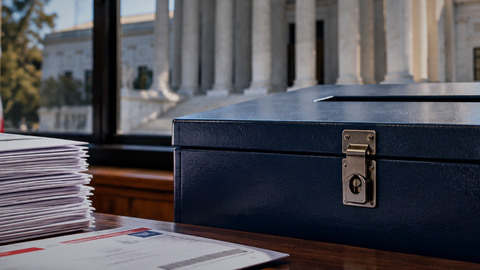
Michigan Democratic Representative Haley Stevens endorsed Republican Mike Rogers for the U.S. Senate on November 1, two days before an election against Democratic nominee Abdul El-Sayed. Stevens had lost the party primary to El-Sayed and had previously pledged support. She cited disputes over campaign rhetoric and a planned unity appearance; El-Sayed’s campaign and other Democrats challenged her account and criticized the reversal. The race for retiring Senator Gary Peters’s seat could affect control of the Senate, but the impact of Stevens’s endorsement on voters remains unknown.

3 min read
Daily Headlines

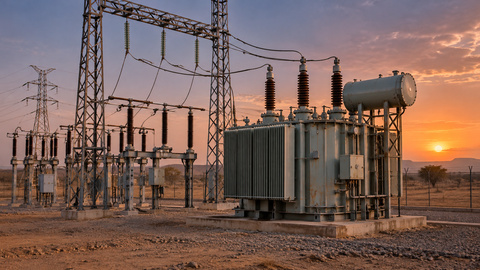
Drone Attacks Deepen Sudan’s Power Crisis, Threatening Hospitals and Water Supplies

Drone attacks on electrical substations in Sudan have cut electricity to communities in northern and eastern states. Strikes on November 1 disabled facilities in Al-Dabbah and Abu Hamad; local sources reported additional November 2 attacks in Aroma and New Halfa. Sudanese rights group Emergency Lawyers says approximately 15 substations have been targeted since early October. Sudanese authorities blame the Rapid Support Forces (RSF), but responsibility for each strike should remain attributed rather than treated as independently proven. Hospitals, water pumps, food systems and agriculture face serious disruption.

3 min read
Daily Headlines

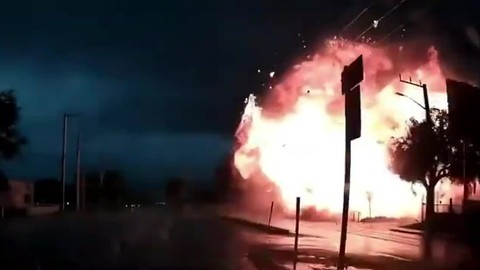
False Nuclear Alerts Spread After Emergency Apps Are Hacked in Ukraine and Russia

Late November 1 and early November 2, public emergency-warning mobile applications in Ukraine and Russia distributed false alerts about nuclear or radiation danger after separate reported cyberattacks. Ukrainian users saw warnings about radiation, chemical threats and street fighting; officials said there was no such radiation emergency and temporarily suspended the affected app before restoring it. Russia’s Emergency Situations Ministry also reported false notices through its app while saying other alert channels continued operating. No verified evidence connects the attacks or establishes a perpetrator.

3 min read
Daily Headlines

Iran Offers Two-Day Path to Reopen Strait of Hormuz, but U.S. Agreement Remains Unresolved

On November 2, Iran said its proposed sequence for reopening the Strait of Hormuz could be compressed into two days if Washington accepted Tehran’s demands, including ending the U.S. naval blockade. Iranian negotiators had left Doha on Sunday; an official briefed on the mediation said a draft proposal was circulating and further talks were possible. The strait has not reopened under a new agreement, and there is no confirmation that the United States has accepted Iran’s conditions. The dispute matters because the maritime route affects energy supplies and regional security.

3 min read
Daily Headlines

Separate Halloween Weekend Shootings Leave Deaths and Dozens of Injuries Across U.S.

Shootings during the Halloween weekend left people dead and dozens wounded in multiple U.S. cities. In Dallas, police reported four deaths and at least 15 injuries across three separate incidents in the Deep Ellum entertainment district early November 1; officials said there was no information showing those shootings were related. An Associated Press roundup on November 1 counted at least six deaths in its then-identified incidents, while a broader CNN tally on November 2 reported more than a dozen deaths and over 90 injuries. Those totals have different scopes and remain subject to updates, not a single official nationwide count.

3 min read
Daily Headlines

More than 52 million Americans have voted as Trump campaigns in closely contested Senate states

More than 52 million Americans have cast early votes in person or by mail, according to University of Florida Election Lab figures cited by Reuters on November 1. President Donald Trump is campaigning in Iowa and Kansas, historically Republican-leaning states where Senate races have tightened. All 435 House seats and 35 Senate seats are on the ballot November 3. Early voting totals describe participation, not how voters voted or who will win.

2 min read
Daily Headlines

Poland’s constitutional court crisis deepens after disputed suspension of tribunal president

Poland’s government backed a move to suspend Constitutional Tribunal president Bogdan Święczkowski, arguing he obstructed judges appointed by the parliamentary majority. President Karol Nawrocki and opposition figures dispute the legality of the action, while Prime Minister Donald Tusk says decisive steps are needed to restore lawful judicial independence. Demonstrators gathered outside the court, and police reported detentions after confrontations. The dispute rests on years of contested judicial appointments and competing interpretations of constitutional authority.

2 min read
Daily Headlines

Taiwan says Chinese coast guard patrols harass shipping east of the island

Taiwan’s Coast Guard says two Chinese coast guard ships patrolling off Taiwan’s eastern coast asserted jurisdiction through radio messages and that Taiwanese vessels monitored them. Beijing describes its operations as routine law enforcement in waters it claims. Taiwan rejects that claim and warns repeated patrols could serve to normalize restrictions on a maritime route essential to supply operations. These concerns are assessments, not proof of a planned blockade.

2 min read
Daily Headlines

United Nations demands investigation after staff member dies in Houthi custody in Yemen

The United Nations reported October 31 that Mohammad el Shami, an employee of its human rights office, died while held by the Houthi de facto authorities in Yemen. He had been detained since June 6, 2024. The UN says it received no proof of life during his detention and has no reliable explanation for his death. It demands an impartial investigation and the release of other detained personnel. The Houthis control Sanaa and much of northwestern Yemen, but are not Yemen’s internationally recognized government.

2 min read
Daily Headlines

United States reviews proposals for limited Black Sea shipping ceasefire

At the October 31 G20 foreign ministers meeting in Atlanta, Secretary of State Marco Rubio said the United States was reviewing proposals—particularly from Turkey and suggestions from India—for arrangements that could help safeguard Black Sea grain and energy shipments. Rubio characterized the diplomatic climate as growing interest, not momentum toward a deal, and made no claim a ceasefire had been reached. Canada’s foreign minister said Russia had not shown willingness to proceed. A shipping arrangement would not end the broader Russia–Ukraine war.

2 min read
Daily Headlines

ACA benchmark premiums rise 13% for 2027 as enrollment approaches

KFF reports average finalized benchmark Silver-plan premiums for 2027 rise 13%, amid changes in eligibility and subsidies. A benchmark premium is not the same as a household’s net monthly bill. Geography, age, plan selection and premium tax-credit eligibility determine what consumers actually pay.

2 min read

A LASTING HOME FOR THE WORK

More than a headline.
A fuller record.

Created and edited by Todd Russell, The Russell Record began on Facebook as The Full & Fair Record. The name is changing; the purpose remains: help readers understand the evidence and reach their own conclusions.

Facebook remains a place to discover the articles and discuss them. This website is their organized, lasting home.

The Russell Record mastheadThe Russell Record — Full & Fair Reporting

Our approach

Document what happened. Examine the evidence. Consider meaningful counterarguments and legitimate criticism. Distinguish facts from claims, analysis, and opinion.

Public figures & the record

Look beyond the party label. What has a person done? What changed as a result? What deserves credit, what warrants scrutiny, and what remains unresolved?

Editorial responsibility & corrections

Todd selects the subjects and provides editorial direction, review, and editing, with AI assistance in research and drafting. Responsibility for publication remains with the editor. Questions, corrections, substantive disagreement, and additional evidence are welcome.

Reading & privacy

This site does not add advertising scripts, analytics services, or social-media tracking widgets. Your browser can remember your preferred article text size on this device. Hosting providers may maintain ordinary server access logs. External source and Facebook links have their own privacy practices.

The purpose is to inform your judgment—not make it for you.

The Russell Record
Symbolic AI-assisted editorial illustration for UN climate report says global emissions cuts remain far short of a path back to 1.5°C; not a documentary photograph.

Today's Top Headlines

The Story, the Facts & Why It Matters

UN climate report says global emissions cuts remain far short of a path back to 1.5°C

A new UN assessment sets out the steep reductions needed to limit a temporary temperature overshoot and contrasts them with what current national commitments would deliver.

What the UN reported

On October 21, the United Nations Environment Programme released Emissions Gap Report 2026: The Point of Return. It examines the difference between emissions expected under government policies and climate commitments and the much lower emissions levels compatible with ambitious temperature goals. The central finding is not that warming can be prevented completely, but that the scale and duration of future warming depend greatly on how quickly countries reduce emissions.

UNEP's report says the world is set to exceed a 1.5°C increase above preindustrial levels. Its lower-overshoot scenario would limit peak warming around mid-century to roughly 1.7–1.8°C and aim to bring warming back to or below 1.5°C by 2100, with about a 50% chance in that scenario. These are modeled outcomes with uncertainty, not forecasts that will necessarily occur.

What 18% and 45% actually mean

The report calculates that following the described scenario would require global greenhouse-gas emissions to be cut 18% by 2030, 45% by 2035 and 69% by 2040, compared with emissions in 2025. The baseline matters: a percentage without its reference year can mislead readers about the magnitude of a proposed reduction.

These are global reductions across the economy, not individual-country quotas automatically imposed by the report. UNEP says the pathway also requires greater removal of carbon dioxide from the atmosphere over the century. Both technological feasibility and the governance of carbon removal would affect the eventual outcome.

What current pledges would achieve

Governments submit national climate commitments under the Paris climate framework. UNEP estimates that fully implementing the commitments currently on the table would cut global emissions about 5–8% by 2030 and 11–15% by 2035, again relative to 2025. That leaves a sizable gap between policy pledges and the lower-overshoot pathway.

UNEP also estimates that continuing current policies could result in warming of roughly 2.8°C within this century, while full implementation of current commitments would lower that projection. These forecasts reflect assumptions about future policies, economic development and physical climate processes, and should not be mistaken for measured temperature changes today.

Reasons for concern and grounds for progress

The report highlights risks associated with higher temperatures, including dangerous heat, heavy rainfall, drought and impacts on health and ecosystems. Each additional increment of warming can raise risks, even if the exact consequences vary by region and by the strength of adaptation measures.

It also identifies genuine progress. Renewable electricity technologies have expanded rapidly, and climate policies have reduced emissions in some jurisdictions and sectors. Advocates of faster action argue these examples show that deeper reductions are possible. Critics of aggressive timelines point to energy affordability, grid reliability, financing needs and the challenges of changing industrial infrastructure. Those constraints must be addressed if emissions strategies are to work fairly and durably.

Why the report matters now

The Emissions Gap Report provides a quantitative benchmark for governments preparing climate negotiations and energy investment decisions. It does not itself enact laws or prove that a particular policy package will meet its pathway. Readers should look for measurable reductions, realistic financing, reliability, adaptation and independent reporting on results.

The core distinction is straightforward: 18% and 45% describe what UNEP says a specific scenario requires, not what the world has already done.


Return to quick summary

Sources & reporting notes

  1. UNEP, October 21, 2026, press release
  2. UNEP Emissions Gap Report 2026 repository record
  3. UNEP Copenhagen Climate Centre summary

THE RUSSELL RECORD

Curated & Edited by Todd Russell • AI-Assisted Research & Drafting

Back to the article library