PUBLIC AFFAIRS · CONTEXT · PERSPECTIVE

THE DAILY BRIEFING

Today’s Top Headlines

The story, the facts & why it matters.

LATEST EDITION
Daily Headlines/3-minute read

Iran Offers Two-Day Path to Reopen Strait of Hormuz, but U.S. Agreement Remains Unresolved

On November 2, Iran said its proposed sequence for reopening the Strait of Hormuz could be compressed into two days if Washington accepted Tehran’s demands, including ending the U.S. naval blockade. Iranian negotiators had left Doha on Sunday; an official briefed on the mediation said a draft proposal was circulating and further talks were possible. The strait has not reopened under a new agreement, and there is no confirmation that the United States has accepted Iran’s conditions. The dispute matters because the maritime route affects energy supplies and regional security.

Read the article
Browse All Daily Headlines

EXPLORE THE RECORD

The article library

Find a story. Follow a subject. Come back for the context.

155 articles
Daily Headlines

Democrat Haley Stevens Endorses Republican Mike Rogers in Crucial Michigan Senate Contest

Michigan Democratic Representative Haley Stevens endorsed Republican Mike Rogers for the U.S. Senate on November 1, two days before an election against Democratic nominee Abdul El-Sayed. Stevens had lost the party primary to El-Sayed and had previously pledged support. She cited disputes over campaign rhetoric and a planned unity appearance; El-Sayed’s campaign and other Democrats challenged her account and criticized the reversal. The race for retiring Senator Gary Peters’s seat could affect control of the Senate, but the impact of Stevens’s endorsement on voters remains unknown.

3 min read
Daily Headlines

Drone Attacks Deepen Sudan’s Power Crisis, Threatening Hospitals and Water Supplies

Drone attacks on electrical substations in Sudan have cut electricity to communities in northern and eastern states. Strikes on November 1 disabled facilities in Al-Dabbah and Abu Hamad; local sources reported additional November 2 attacks in Aroma and New Halfa. Sudanese rights group Emergency Lawyers says approximately 15 substations have been targeted since early October. Sudanese authorities blame the Rapid Support Forces (RSF), but responsibility for each strike should remain attributed rather than treated as independently proven. Hospitals, water pumps, food systems and agriculture face serious disruption.

3 min read
Daily Headlines

False Nuclear Alerts Spread After Emergency Apps Are Hacked in Ukraine and Russia

Late November 1 and early November 2, public emergency-warning mobile applications in Ukraine and Russia distributed false alerts about nuclear or radiation danger after separate reported cyberattacks. Ukrainian users saw warnings about radiation, chemical threats and street fighting; officials said there was no such radiation emergency and temporarily suspended the affected app before restoring it. Russia’s Emergency Situations Ministry also reported false notices through its app while saying other alert channels continued operating. No verified evidence connects the attacks or establishes a perpetrator.

3 min read
Daily Headlines

Iran Offers Two-Day Path to Reopen Strait of Hormuz, but U.S. Agreement Remains Unresolved

On November 2, Iran said its proposed sequence for reopening the Strait of Hormuz could be compressed into two days if Washington accepted Tehran’s demands, including ending the U.S. naval blockade. Iranian negotiators had left Doha on Sunday; an official briefed on the mediation said a draft proposal was circulating and further talks were possible. The strait has not reopened under a new agreement, and there is no confirmation that the United States has accepted Iran’s conditions. The dispute matters because the maritime route affects energy supplies and regional security.

3 min read
Daily Headlines

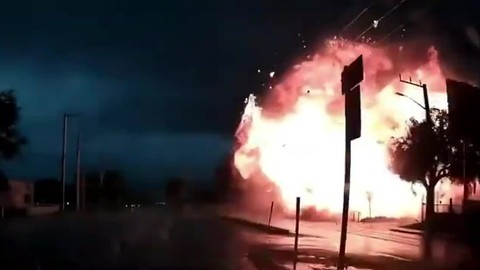
Separate Halloween Weekend Shootings Leave Deaths and Dozens of Injuries Across U.S.

Shootings during the Halloween weekend left people dead and dozens wounded in multiple U.S. cities. In Dallas, police reported four deaths and at least 15 injuries across three separate incidents in the Deep Ellum entertainment district early November 1; officials said there was no information showing those shootings were related. An Associated Press roundup on November 1 counted at least six deaths in its then-identified incidents, while a broader CNN tally on November 2 reported more than a dozen deaths and over 90 injuries. Those totals have different scopes and remain subject to updates, not a single official nationwide count.

3 min read
Daily Headlines

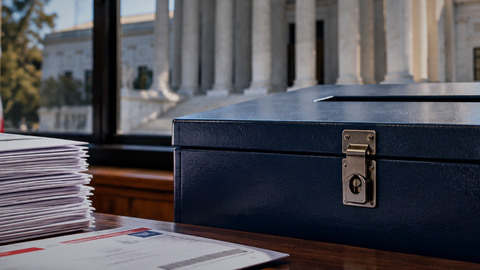
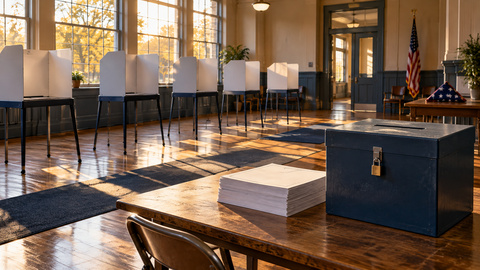
More than 52 million Americans have voted as Trump campaigns in closely contested Senate states

More than 52 million Americans have cast early votes in person or by mail, according to University of Florida Election Lab figures cited by Reuters on November 1. President Donald Trump is campaigning in Iowa and Kansas, historically Republican-leaning states where Senate races have tightened. All 435 House seats and 35 Senate seats are on the ballot November 3. Early voting totals describe participation, not how voters voted or who will win.

2 min read
Daily Headlines

Poland’s constitutional court crisis deepens after disputed suspension of tribunal president

Poland’s government backed a move to suspend Constitutional Tribunal president Bogdan Święczkowski, arguing he obstructed judges appointed by the parliamentary majority. President Karol Nawrocki and opposition figures dispute the legality of the action, while Prime Minister Donald Tusk says decisive steps are needed to restore lawful judicial independence. Demonstrators gathered outside the court, and police reported detentions after confrontations. The dispute rests on years of contested judicial appointments and competing interpretations of constitutional authority.

2 min read
Daily Headlines

Taiwan says Chinese coast guard patrols harass shipping east of the island

Taiwan’s Coast Guard says two Chinese coast guard ships patrolling off Taiwan’s eastern coast asserted jurisdiction through radio messages and that Taiwanese vessels monitored them. Beijing describes its operations as routine law enforcement in waters it claims. Taiwan rejects that claim and warns repeated patrols could serve to normalize restrictions on a maritime route essential to supply operations. These concerns are assessments, not proof of a planned blockade.

2 min read
Daily Headlines

United Nations demands investigation after staff member dies in Houthi custody in Yemen

The United Nations reported October 31 that Mohammad el Shami, an employee of its human rights office, died while held by the Houthi de facto authorities in Yemen. He had been detained since June 6, 2024. The UN says it received no proof of life during his detention and has no reliable explanation for his death. It demands an impartial investigation and the release of other detained personnel. The Houthis control Sanaa and much of northwestern Yemen, but are not Yemen’s internationally recognized government.

2 min read
Daily Headlines

United States reviews proposals for limited Black Sea shipping ceasefire

At the October 31 G20 foreign ministers meeting in Atlanta, Secretary of State Marco Rubio said the United States was reviewing proposals—particularly from Turkey and suggestions from India—for arrangements that could help safeguard Black Sea grain and energy shipments. Rubio characterized the diplomatic climate as growing interest, not momentum toward a deal, and made no claim a ceasefire had been reached. Canada’s foreign minister said Russia had not shown willingness to proceed. A shipping arrangement would not end the broader Russia–Ukraine war.

2 min read
Daily Headlines

ACA benchmark premiums rise 13% for 2027 as enrollment approaches

KFF reports average finalized benchmark Silver-plan premiums for 2027 rise 13%, amid changes in eligibility and subsidies. A benchmark premium is not the same as a household’s net monthly bill. Geography, age, plan selection and premium tax-credit eligibility determine what consumers actually pay.

2 min read

A LASTING HOME FOR THE WORK

More than a headline.
A fuller record.

Created and edited by Todd Russell, The Russell Record began on Facebook as The Full & Fair Record. The name is changing; the purpose remains: help readers understand the evidence and reach their own conclusions.

Facebook remains a place to discover the articles and discuss them. This website is their organized, lasting home.

The Russell Record mastheadThe Russell Record — Full & Fair Reporting

Our approach

Document what happened. Examine the evidence. Consider meaningful counterarguments and legitimate criticism. Distinguish facts from claims, analysis, and opinion.

Public figures & the record

Look beyond the party label. What has a person done? What changed as a result? What deserves credit, what warrants scrutiny, and what remains unresolved?

Editorial responsibility & corrections

Todd selects the subjects and provides editorial direction, review, and editing, with AI assistance in research and drafting. Responsibility for publication remains with the editor. Questions, corrections, substantive disagreement, and additional evidence are welcome.

Reading & privacy

This site does not add advertising scripts, analytics services, or social-media tracking widgets. Your browser can remember your preferred article text size on this device. Hosting providers may maintain ordinary server access logs. External source and Facebook links have their own privacy practices.

The purpose is to inform your judgment—not make it for you.

The Russell Record
A custom editorial illustration and large headline for Marco Rubio — Diplomacy and National Security

Public Figure Profiles

The Person, the Actions & the Record

Marco Rubio — Diplomacy and National Security

Public Figure Profile · Part I: Secretary of State and National Security Advisor.

The essential context

As Secretary of State and National Security Advisor, Marco Rubio has unusually broad influence over diplomacy and national-security coordination. His record includes hemisphere-focused agreements, NATO burden-sharing, Ukraine and Iran diplomacy, and major controversies over USAID and the International Criminal Court.

This examination distinguishes documented policies and reported events from claims by officials, forecasts and unresolved outcomes.

What the latest evidence clarifies

As of October 8, Reuters reports Rubio describing Ukraine as a dangerous stalemate; negotiations have not ended the war. Treat recent agreements and declarations as milestones, not as proof of lasting peace. His dual role concentrates influence but also increases workload.

An editorial graphic highlighting three key aspects of Marco Rubio — Diplomacy and National Security
Russell Record editorial graphic; see the linked primary sources and reporting notes.

The full record

Diplomacy, national security, negotiations and the expanding role of one of the central figures in current U.S. foreign policy.

An Unusual Position Of Influence

Marco Rubio entered President Donald Trump’s second administration as Secretary of State after receiving an unusually bipartisan 99–0 confirmation vote in the U.S. Senate on January 20, 2025.

He also became the first Hispanic American to serve as Secretary of State.

Several months later, President Trump placed Rubio in charge of the National Security Council as well.

Today, official White House records list Rubio as both Secretary of State and Assistant to the President and National Security Advisor.

Only Henry Kissinger previously served simultaneously as Secretary of State and National Security Advisor.

That combination matters. As Secretary of State, Rubio directs American diplomacy and the worldwide State Department.

As National Security Advisor, he coordinates advice reaching the president across diplomacy, defense, intelligence and broader national-security policy.

The arrangement therefore places Rubio close to the center of American decision-making involving Russia, Ukraine, China, Iran, NATO, Israel, Latin America and numerous other international issues.

It also creates a legitimate question about workload and concentration of responsibility. When Rubio initially received the second position, former National Security Council officials noted that either job by itself can demand extraordinarily long hours.

So the dual role may improve coordination between the White House and State Department — but it also places an unusually broad portfolio in the hands of one official.

Making The Western Hemisphere A Priority

Rubio sent a message about his priorities almost immediately. His first overseas trip as Secretary of State was not to Europe or Asia.

It was to Panama El Salvador Costa Rica Guatemala Dominican Republic That was unusual and intentional.

Rubio has argued that Washington spent too many years treating nearby countries as secondary while migration, narcotics trafficking, organized crime and Chinese economic influence became increasingly important national-security issues.

The trip produced several tangible developments.

In Panama, Rubio pressed concerns about Chinese influence surrounding the strategically important Panama Canal.

Shortly afterward, Panamanian President José Raúl Mulino announced that Panama would not renew its participation in China’s Belt and Road Initiative.

China accused Washington of coercion. Mulino denied that Rubio had ordered Panama to withdraw.

But whatever interpretation is placed on the diplomatic pressure involved, the result represented a reduction in China’s formal economic relationship with a strategically important Latin American country.

In El Salvador, Rubio expanded cooperation with President Nayib Bukele involving migration, organized crime and deportations.

The two governments also signed a much less-publicized framework for peaceful civil-nuclear cooperation involving energy, nuclear safety and nonproliferation.

Guatemala agreed to accept substantially more deportation flights from the United States.

These agreements reflected Rubio’s broader effort to make migration, security and strategic competition central elements of American diplomacy in the hemisphere.

Cartels As National-Security Threats

Rubio’s State Department also formally designated several major criminal organizations as Foreign Terrorist Organizations.

Those included

  • the Sinaloa Cartel
  • Jalisco New Generation Cartel
  • MS-13
  • Tren de Aragua
  • and several other major trafficking organizations.

The designation expanded the government’s ability to use sanctions and terrorism-related criminal statutes against people or organizations providing support to those groups.

Supporters argue that organizations possessing military-grade weapons, controlling territory and trafficking narcotics and people across borders should be treated as national-security threats rather than simply criminal enterprises.

Critics warn that applying terrorism authorities to criminal cartels can blur traditional distinctions between law enforcement and national-security policy and could support increasingly militarized responses.

Either way, the policy represents a significant change in how the United States formally categorizes several major criminal organizations.

China And The Indo-Pacific

China has been one of the most consistent subjects of Rubio’s political career.

As a senator, he focused heavily on Chinese human-rights abuses, forced labor, Hong Kong, Taiwan and America’s dependence on Chinese supply chains.

That emphasis has continued at the State Department.

One of Rubio’s first meetings after becoming Secretary of State was with representatives of the Quad — the United States, India, Japan and Australia.

In May 2026, Quad foreign ministers agreed to undertake their first major joint infrastructure project: development of a port in Fiji.

They also announced new cooperation involving critical minerals and Indo-Pacific energy security.

These initiatives are important because China dominates significant portions of the global processing and supply chain for minerals essential to

  • semiconductors
  • batteries
  • aerospace
  • defense systems
  • electronics
  • advanced manufacturing.

Rubio described the Quad as a cornerstone of U.S. strategy in the region.

China views the grouping very differently and has accused the Quad of encouraging bloc confrontation and attempting to contain Chinese influence.

There are also tensions inside the American approach.

Rubio has historically supported strong security assistance for Taiwan, but some Republican senators recently criticized the administration for delaying portions of Taiwan military assistance while Trump negotiates with Chinese President Xi Jinping.

So Rubio’s traditional hard line toward Beijing now exists inside a broader administration strategy that combines confrontation, economic pressure and direct negotiation.

Nato: More Defense Spending, But Continued Alliance

Rubio has also become an important intermediary between President Trump and America’s European allies.

The Trump administration demanded that NATO nations substantially increase their own defense spending.

At the 2025 NATO summit, alliance members agreed to a new long-term framework calling for

  • at least 3.5% of GDP for core defense spending
  • up to 1.5% for broader security-related investments.

That represents a dramatic increase from NATO’s previous 2% benchmark. Trump was the principal political force behind the demand.

Rubio helped advocate and negotiate the administration’s position with allied governments. The challenge has been communicating two messages simultaneously

Europe must do substantially more for its own defense. The United States still considers the transatlantic relationship strategically important.

Rubio’s February 2026 appearance at the Munich Security Conference illustrated that balancing act.

He reassured European leaders that the United States and Europe “belong together,” while continuing to criticize European dependence on American defense spending, mass migration and other policies.

Associated Press described Rubio’s presentation as softer in tone than some previous administration rhetoric while remaining firm on the administration’s underlying positions.

Ukraine And Russia

Rubio has been deeply involved in efforts to negotiate an end to Russia’s war against Ukraine.

One of the most significant early moments came in Jeddah, Saudi Arabia, in March 2025.

Following negotiations led on the American side by Rubio and other administration officials, Ukraine agreed to an American proposal for an immediate 30-day ceasefire if Russia would reciprocate.

The United States simultaneously restored intelligence sharing and military assistance to Ukraine. Russia did not ultimately accept the comprehensive ceasefire.

The war continued. That makes the distinction important Jeddah represented a meaningful diplomatic negotiating result.

It did NOT represent an end to the war.

Rubio has continued communicating with Russian Foreign Minister Sergei Lavrov and Ukrainian officials.

As recently as September 2026, Rubio said both Ukraine and Russia had expressed interest in exploring more limited agreements involving energy infrastructure and grain shipments.

The United States has also invited Russian President Vladimir Putin to the December G20 meeting in Miami.

Whether continuing dialogue eventually contributes to ending the war remains unresolved. Supporters argue that wars cannot end without negotiation.

Critics worry that continued engagement with Moscow can provide Russia diplomatic legitimacy without requiring sufficient concessions.

At present, neither interpretation can claim a completed outcome. The war continues.

Iran: Diplomacy During An Active Conflict

Iran has become another major part of Rubio’s portfolio. His publicly stated position has remained straightforward

Iran must not obtain a nuclear weapon.

The administration has simultaneously used military pressure, economic sanctions and indirect negotiations.

As of late September 2026, U.S. and Iranian officials have resumed indirect talks involving Iran’s nuclear program, sanctions and access through the Strait of Hormuz, but those negotiations have not produced a comprehensive settlement.

Rubio has publicly said that sanctions relief would have to be connected to meaningful changes in Iran’s nuclear activities rather than simply reopening shipping lanes.

This is another area where his role is consequential but the final result remains unknown.

A negotiated settlement could become one of the administration’s major diplomatic achievements.

Failure could mean continued military confrontation and economic disruption across the Middle East. For now, it belongs in the category of unfinished diplomacy.

India And Pakistan

Rubio also participated directly in efforts to de-escalate the dangerous May 2025 military confrontation between nuclear-armed India and Pakistan.

Over approximately 48 hours, Rubio and Vice President JD Vance spoke with senior officials in both governments, including prime ministers, foreign ministers, national-security officials and Pakistan’s army leadership.

India and Pakistan subsequently agreed to an immediate ceasefire. Pakistan publicly credited international diplomacy, including the United States.

India emphasized that the final cessation of hostilities was arranged through direct communication between the two countries’ military leadership.

The careful conclusion is therefore that Rubio and other U.S. officials were substantially involved in the international de-escalation effort, while the precise degree to which Washington produced the final ceasefire remains disputed.

Rwanda And The Democratic Republic Of Congo

In June 2025, Rubio hosted the foreign ministers of Rwanda and the Democratic Republic of Congo in Washington for the signing of a U.S.-brokered peace agreement.

The agreement included commitments involving

  • territorial integrity
  • armed groups
  • regional security
  • troop withdrawals
  • and economic cooperation.

The region contains some of the world’s most important deposits of cobalt, lithium, tantalum and other strategic minerals.

The agreement therefore had both humanitarian and strategic economic implications. But the agreement did not permanently resolve the conflict.

The M23 rebel organization was not itself a party to the original agreement, and fighting subsequently continued.

So the signing was a genuine diplomatic result. Whether it ultimately produces durable peace remains an open question.

Venezuela: One Of Rubio’S Longest-Running Issues

Venezuela has occupied Rubio’s attention for years.

In July 2025, negotiations involving the United States, Venezuela and El Salvador resulted in the release of

10 Americans detained in Venezuela. Venezuelan political prisoners were also released.

Rubio publicly credited his State Department team and Salvadoran President Nayib Bukele with helping secure the agreement.

The larger Venezuela situation changed dramatically following the removal and capture of Nicolás Maduro in January 2026.

Rubio has since become centrally involved in the American relationship with interim President Delcy Rodríguez and discussions concerning

  • political transition
  • future elections
  • economic recovery
  • sanctions
  • oil production
  • international investment
  • and restructuring Venezuela’s enormous sovereign debt.

Trump and Rodríguez discussed elections directly at the United Nations this month. Rubio has also emphasized that Venezuela must eventually hold free elections.

But as of September 30, no firm election date has been established. So Venezuela could eventually become one of the defining parts of Rubio’s tenure.

But it is too early to describe the political transition as completed.

Rubio’S Communication And Diplomatic Style

There is another part of Rubio’s role that deserves attention because diplomacy is not only about policy.

It is also about communication.

Rubio has long been known as a politician comfortable with extended interviews, congressional testimony and detailed policy discussions.

Rather than relying primarily on short slogans, he frequently explains the reasoning behind administration policies at considerable length.

That does not mean everyone agrees with his arguments. But his communication style has become relevant to how he performs the diplomatic role.

A useful example occurred during a difficult G7 foreign ministers meeting in Canada in March 2025.

The United States and several allies entered the meeting divided over Ukraine, Russia, Israel and other issues.

Reuters reported that diplomats credited Rubio with helping negotiate a joint communiqué that had initially appeared difficult to achieve.

Diplomats who participated described him as candid and firm on major U.S. positions, but also flexible on other issues and willing to listen to allied concerns.

Rubio himself summarized the approach by saying countries should not allow issues on which they disagree to prevent cooperation on areas where they do agree.

That may be one of the clearer illustrations of his diplomatic communication style State the disagreement directly.

Explain the American position. Avoid pretending differences do not exist. But continue looking for areas where agreement remains possible.

His 2026 Munich speech followed a similar pattern.

Rubio offered strong criticism of some European policies while simultaneously emphasizing the historical relationship between the United States and Europe.

Associated Press characterized the presentation as noticeably more reassuring in tone than some previous administration rhetoric, without abandoning the administration’s substantive positions.

Even before Rubio took office, outgoing Secretary of State Antony Blinken — a Democrat serving under President Biden — publicly described Rubio as “extremely well-prepared” for the position and “deeply thoughtful” about major foreign-policy questions, citing his years on the Senate Foreign Relations and Intelligence committees.

Those observations do not establish that Rubio’s policies are correct.

But they help explain why communication has become an important part of his profile as Secretary of State.

He generally presents administration policy in a manner that is direct and firm while leaving room for continued negotiation.

In diplomacy, where adversaries and allies often disagree profoundly while still needing to talk to one another, that distinction can matter.

  • USAID: ONE OF HIS MOST CONTROVERSIAL ACTIONS

Not all of Rubio’s consequential actions involve negotiated agreements.

One of the largest institutional changes under his leadership involved the U.S. Agency for International Development.

After an administration review, Rubio announced in March 2025 that approximately

83% Of Usaid Programs

— about 5,200 of roughly 6,200 programs — would be terminated. Remaining foreign-assistance programs were moved toward tighter State Department control.

The administration argues that American foreign aid should continue only when it clearly advances U.S. national interests and that the previous system had become overly bureaucratic, ideological and insufficiently accountable.

Critics argue the rapid reductions damaged humanitarian relief, global disease prevention, development programs and America’s diplomatic influence.

The restructuring also generated substantial litigation. So this is clearly one of Rubio’s most consequential actions.

Whether history ultimately views it as a necessary restructuring or a damaging reduction of American soft power remains strongly contested.

The International Criminal Court

Rubio has also become one of the administration’s leading critics of the International Criminal Court.

The United States is not a member of the ICC.

Rubio argues that the court has improperly attempted to exercise jurisdiction over citizens and officials from non-member countries, particularly the United States and Israel.

The administration has imposed sanctions and visa restrictions against ICC officials and has considered broader measures against the institution.

Supporters argue that these actions protect American personnel and allied officials from a court whose jurisdiction the United States never accepted.

Many European governments, Japan and international-law advocates take the opposite position, arguing that sanctioning judges and prosecutors undermines an institution created to prosecute genocide, war crimes and crimes against humanity.

This remains one of the sharpest disputes between Rubio’s State Department and several traditional U.S. allies.

The Foreign-Policy Philosophy

Rubio has repeatedly described the administration’s foreign-policy test in relatively simple terms Does a policy make the United States

Safer?

That framework reflects the administration’s “America First” philosophy.

But Rubio’s implementation combines several approaches that historically have not always existed comfortably together

  • strong military deterrence;
  • direct negotiations with adversaries;
  • support for NATO combined with demands for much greater burden-sharing;
  • aggressive competition with China;
  • reduced traditional foreign assistance;
  • increased emphasis on the Western Hemisphere;
  • human-rights pressure against selected authoritarian governments;
  • economic security and critical-mineral policy;
  • and willingness to use sanctions, tariffs and visa restrictions as diplomatic tools.

The long-term question is whether those pieces form a durable foreign-policy doctrine or whether tensions eventually emerge between them.

The record so far

Rubio’s tenure is still underway, so any assessment needs to distinguish between completed results and unfinished diplomacy.

There have been identifiable outcomes

  • Panama moved away from China’s Belt and Road Initiative after U.S. diplomatic pressure.
  • Central American governments expanded migration and security cooperation.
  • Ten Americans detained in Venezuela were released.
  • The Rwanda–Congo agreement was signed in Washington.
  • The United States participated substantially in the India–Pakistan de-escalation effort.
  • NATO adopted dramatically higher long-term defense-spending commitments.
  • Quad countries expanded cooperation involving infrastructure, critical minerals and energy security.
  • Rubio has helped maintain diplomatic communication with allies whose relationships with the Trump administration have often been strained.

But several of the largest issues remain unresolved The Russia–Ukraine war continues. U.S.–Iran negotiations have not produced a comprehensive settlement.

Fighting has continued despite the Rwanda–Congo agreement. Venezuela has not yet completed a democratic transition or scheduled firm national elections.

U.S.–China relations remain a mixture of strategic confrontation and direct negotiation. And some of Rubio’s most important policies remain deeply controversial

  • dismantling most USAID programs;
  • sanctions and pressure against the International Criminal Court;
  • the administration’s increasingly coercive approach toward Cuba and Venezuela;
  • the use of terrorist designations against criminal cartels;
  • and the wisdom of combining the positions of Secretary of State and National Security Advisor in one person.

Those disagreements belong in the record too.

The record in perspective

Marco Rubio entered the State Department with considerably more foreign-policy experience than many first-time cabinet officials.

Fourteen years in the Senate had already placed him deeply inside debates involving China, Russia, intelligence, Latin America, terrorism and international human rights.

His current dual position has expanded that responsibility dramatically.

He is now involved simultaneously in alliance management, active wars, peace negotiations, economic security, migration, hostage diplomacy, sanctions, intelligence coordination and strategic competition with major powers.

His communication style has also become part of that role.

Reporting from diplomatic meetings shows a pattern of direct language and firmness on administration priorities combined, at times, with enough flexibility to keep negotiations moving among allies who strongly disagree with Washington.

Whether that approach ultimately produces durable results will depend largely on matters that remain unresolved.

Ukraine. Iran. Venezuela. China. The future of NATO. And several other conflicts in which negotiations remain underway.

For that reason, this is not a final judgment on Marco Rubio’s tenure. It is the record as it stands on September 30, 2026

what has been accomplished, what remains disputed, and what is still very much unfinished.

Return to quick summary

Sources & reporting notes

  1. AP — Rubio explains NATO burden-sharing in Portugal (Oct. 8, 2026)
  2. Reuters — Rubio warns that the Ukraine war is in a dangerous stalemate (Oct. 8, 2026)
  3. AP — Rubio waives human-rights conditions on Egypt military aid (Oct. 2, 2026)
  4. NATO — The Hague 2025 defense investment declaration
  5. The Russell Record — Marco Rubio, Part II: The Senate Years

THE RUSSELL RECORD

Curated & Edited by Todd Russell • AI-Assisted Research & Drafting

Back to the article library