PUBLIC AFFAIRS · CONTEXT · PERSPECTIVE

THE DAILY BRIEFING

Today’s Top Headlines

The story, the facts & why it matters.

LATEST EDITION
Daily Headlines/3-minute read

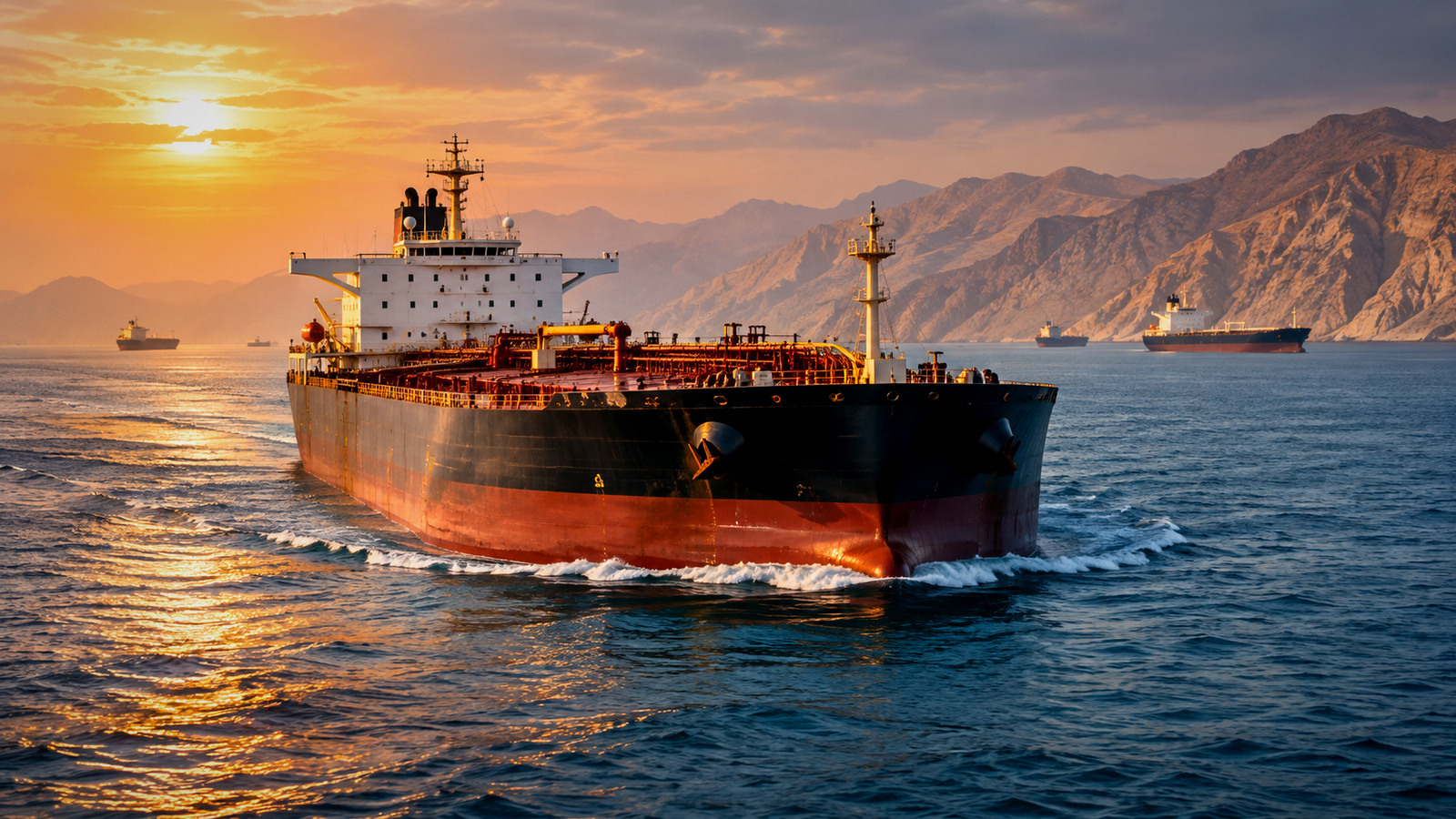
Iran Offers Two-Day Path to Reopen Strait of Hormuz, but U.S. Agreement Remains Unresolved

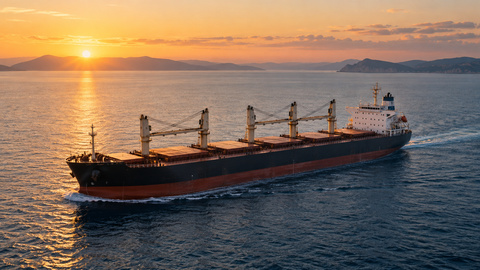
On November 2, Iran said its proposed sequence for reopening the Strait of Hormuz could be compressed into two days if Washington accepted Tehran’s demands, including ending the U.S. naval blockade. Iranian negotiators had left Doha on Sunday; an official briefed on the mediation said a draft proposal was circulating and further talks were possible. The strait has not reopened under a new agreement, and there is no confirmation that the United States has accepted Iran’s conditions. The dispute matters because the maritime route affects energy supplies and regional security.

Read the article
Browse All Daily Headlines

EXPLORE THE RECORD

The article library

Find a story. Follow a subject. Come back for the context.

155 articles
Daily Headlines

Democrat Haley Stevens Endorses Republican Mike Rogers in Crucial Michigan Senate Contest

Michigan Democratic Representative Haley Stevens endorsed Republican Mike Rogers for the U.S. Senate on November 1, two days before an election against Democratic nominee Abdul El-Sayed. Stevens had lost the party primary to El-Sayed and had previously pledged support. She cited disputes over campaign rhetoric and a planned unity appearance; El-Sayed’s campaign and other Democrats challenged her account and criticized the reversal. The race for retiring Senator Gary Peters’s seat could affect control of the Senate, but the impact of Stevens’s endorsement on voters remains unknown.

3 min read
Daily Headlines

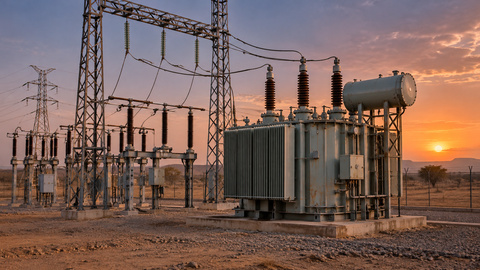
Drone Attacks Deepen Sudan’s Power Crisis, Threatening Hospitals and Water Supplies

Drone attacks on electrical substations in Sudan have cut electricity to communities in northern and eastern states. Strikes on November 1 disabled facilities in Al-Dabbah and Abu Hamad; local sources reported additional November 2 attacks in Aroma and New Halfa. Sudanese rights group Emergency Lawyers says approximately 15 substations have been targeted since early October. Sudanese authorities blame the Rapid Support Forces (RSF), but responsibility for each strike should remain attributed rather than treated as independently proven. Hospitals, water pumps, food systems and agriculture face serious disruption.

3 min read
Daily Headlines

False Nuclear Alerts Spread After Emergency Apps Are Hacked in Ukraine and Russia

Late November 1 and early November 2, public emergency-warning mobile applications in Ukraine and Russia distributed false alerts about nuclear or radiation danger after separate reported cyberattacks. Ukrainian users saw warnings about radiation, chemical threats and street fighting; officials said there was no such radiation emergency and temporarily suspended the affected app before restoring it. Russia’s Emergency Situations Ministry also reported false notices through its app while saying other alert channels continued operating. No verified evidence connects the attacks or establishes a perpetrator.

3 min read
Daily Headlines

Iran Offers Two-Day Path to Reopen Strait of Hormuz, but U.S. Agreement Remains Unresolved

On November 2, Iran said its proposed sequence for reopening the Strait of Hormuz could be compressed into two days if Washington accepted Tehran’s demands, including ending the U.S. naval blockade. Iranian negotiators had left Doha on Sunday; an official briefed on the mediation said a draft proposal was circulating and further talks were possible. The strait has not reopened under a new agreement, and there is no confirmation that the United States has accepted Iran’s conditions. The dispute matters because the maritime route affects energy supplies and regional security.

3 min read
Daily Headlines

Separate Halloween Weekend Shootings Leave Deaths and Dozens of Injuries Across U.S.

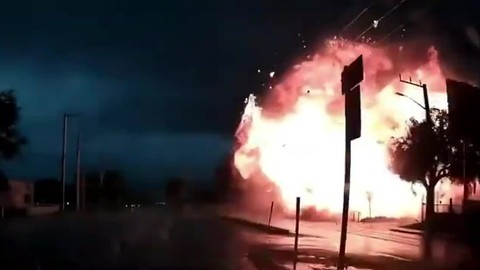
Shootings during the Halloween weekend left people dead and dozens wounded in multiple U.S. cities. In Dallas, police reported four deaths and at least 15 injuries across three separate incidents in the Deep Ellum entertainment district early November 1; officials said there was no information showing those shootings were related. An Associated Press roundup on November 1 counted at least six deaths in its then-identified incidents, while a broader CNN tally on November 2 reported more than a dozen deaths and over 90 injuries. Those totals have different scopes and remain subject to updates, not a single official nationwide count.

3 min read
Daily Headlines

More than 52 million Americans have voted as Trump campaigns in closely contested Senate states

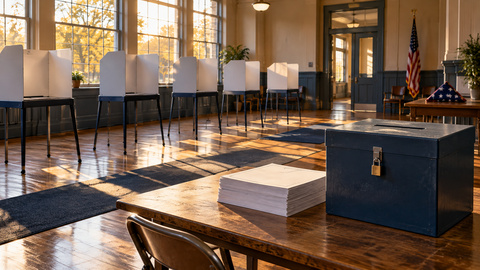
More than 52 million Americans have cast early votes in person or by mail, according to University of Florida Election Lab figures cited by Reuters on November 1. President Donald Trump is campaigning in Iowa and Kansas, historically Republican-leaning states where Senate races have tightened. All 435 House seats and 35 Senate seats are on the ballot November 3. Early voting totals describe participation, not how voters voted or who will win.

2 min read
Daily Headlines

Poland’s constitutional court crisis deepens after disputed suspension of tribunal president

Poland’s government backed a move to suspend Constitutional Tribunal president Bogdan Święczkowski, arguing he obstructed judges appointed by the parliamentary majority. President Karol Nawrocki and opposition figures dispute the legality of the action, while Prime Minister Donald Tusk says decisive steps are needed to restore lawful judicial independence. Demonstrators gathered outside the court, and police reported detentions after confrontations. The dispute rests on years of contested judicial appointments and competing interpretations of constitutional authority.

2 min read
Daily Headlines

Taiwan says Chinese coast guard patrols harass shipping east of the island

Taiwan’s Coast Guard says two Chinese coast guard ships patrolling off Taiwan’s eastern coast asserted jurisdiction through radio messages and that Taiwanese vessels monitored them. Beijing describes its operations as routine law enforcement in waters it claims. Taiwan rejects that claim and warns repeated patrols could serve to normalize restrictions on a maritime route essential to supply operations. These concerns are assessments, not proof of a planned blockade.

2 min read
Daily Headlines

United Nations demands investigation after staff member dies in Houthi custody in Yemen

The United Nations reported October 31 that Mohammad el Shami, an employee of its human rights office, died while held by the Houthi de facto authorities in Yemen. He had been detained since June 6, 2024. The UN says it received no proof of life during his detention and has no reliable explanation for his death. It demands an impartial investigation and the release of other detained personnel. The Houthis control Sanaa and much of northwestern Yemen, but are not Yemen’s internationally recognized government.

2 min read
Daily Headlines

United States reviews proposals for limited Black Sea shipping ceasefire

At the October 31 G20 foreign ministers meeting in Atlanta, Secretary of State Marco Rubio said the United States was reviewing proposals—particularly from Turkey and suggestions from India—for arrangements that could help safeguard Black Sea grain and energy shipments. Rubio characterized the diplomatic climate as growing interest, not momentum toward a deal, and made no claim a ceasefire had been reached. Canada’s foreign minister said Russia had not shown willingness to proceed. A shipping arrangement would not end the broader Russia–Ukraine war.

2 min read
Daily Headlines

ACA benchmark premiums rise 13% for 2027 as enrollment approaches

KFF reports average finalized benchmark Silver-plan premiums for 2027 rise 13%, amid changes in eligibility and subsidies. A benchmark premium is not the same as a household’s net monthly bill. Geography, age, plan selection and premium tax-credit eligibility determine what consumers actually pay.

2 min read

A LASTING HOME FOR THE WORK

More than a headline.
A fuller record.

Created and edited by Todd Russell, The Russell Record began on Facebook as The Full & Fair Record. The name is changing; the purpose remains: help readers understand the evidence and reach their own conclusions.

Facebook remains a place to discover the articles and discuss them. This website is their organized, lasting home.

The Russell Record mastheadThe Russell Record — Full & Fair Reporting

Our approach

Document what happened. Examine the evidence. Consider meaningful counterarguments and legitimate criticism. Distinguish facts from claims, analysis, and opinion.

Public figures & the record

Look beyond the party label. What has a person done? What changed as a result? What deserves credit, what warrants scrutiny, and what remains unresolved?

Editorial responsibility & corrections

Todd selects the subjects and provides editorial direction, review, and editing, with AI assistance in research and drafting. Responsibility for publication remains with the editor. Questions, corrections, substantive disagreement, and additional evidence are welcome.

Reading & privacy

This site does not add advertising scripts, analytics services, or social-media tracking widgets. Your browser can remember your preferred article text size on this device. Hosting providers may maintain ordinary server access logs. External source and Facebook links have their own privacy practices.

The purpose is to inform your judgment—not make it for you.

The Russell Record
A custom editorial illustration and large headline for Iowa’s Proposed $15 Billion Steel Plant: Promise and Proof

Issues & Policy

The Decisions & Their Consequences

Iowa’s Proposed $15 Billion Steel Plant: Promise and Proof

American manufacturing · Investment, jobs, tariffs and unanswered questions.

The essential context

Mesabi Metallics has proposed a roughly $15 billion steelmaking complex in Iowa, linked to Minnesota iron-ore processing. The projected jobs and capacity are substantial, but the announcement is not the same as a fully financed or operating factory.

This examination distinguishes documented policies and reported events from claims by officials, forecasts and unresolved outcomes.

What the latest evidence clarifies

White House and EXIM announcements confirm that the project remains proposed; projections should remain projections. The USITC found earlier steel tariffs boosted domestic output but raised input costs for downstream industries, an important historical tradeoff rather than a precise estimate of today’s tariff effects.

An editorial graphic highlighting three key aspects of Iowa’s Proposed $15 Billion Steel Plant: Promise and Proof
Russell Record editorial graphic; see the linked primary sources and reporting notes.

The full record

A potentially enormous new American manufacturing investment — what we know now, why it could matter, and what still has to happen.

President Donald Trump and executives from Mesabi Metallics announced plans for a major new steelmaking complex in Iowa — a proposed investment of approximately

$15 Billion

If it is completed at the scale now being described, the facility would become one of the largest steel-producing operations in the United States and, according to the White House, ultimately the largest single steel plant in American history.

This is potentially a very significant development for American manufacturing. But there is an important distinction to make from the beginning

This is a MAJOR PROJECT ANNOUNCEMENT. It is not yet a completed $15 billion factory. So the fairest way to evaluate it is to separate

  • What has been announced and can presently be verified.

What the company and administration are projecting. What still must happen before those projections become reality.

What Exactly Is Being Proposed?

The project is being developed by Mesabi Metallics, a Minnesota-based mining and steel company owned by India-based industrial conglomerate Essar Group.

The proposed Iowa complex is expected to involve approximately $15 billion in investment. The first phase is projected to have approximately

7.5 Million Tons Of Annual Steelmaking Capacity with later expansion potentially increasing the facility to approximately

10 Million Tons Per Year. First steel production is currently targeted for 2030.

The White House describes the project as the first new American “mega-steel” plant since the 1960s and says that, when completely built out, it would become the largest steel plant in U.S. history.

That characterization refers to the plant's planned future size — not to an operating facility that already exists.

Still, the proposed scale is undeniably enormous.

For perspective, the American Iron and Steel Institute reports that the entire United States produced approximately 90 million net tons of raw steel in 2025.

A facility eventually capable of producing around 10 million tons annually would therefore represent a very substantial addition to American steelmaking capacity.

the announcement identified More About The Location

Earlier reports identified only “eastern Iowa.” There is now a more specific indication.

Iowa Republican Rep. Mariannette Miller-Meeks announced that the project will be located in

Lee County, Iowa.

The exact site within Lee County has not yet been publicly confirmed in the reporting available as this is being written.

There had already been considerable evidence pointing toward southeastern Iowa.

Property owners in Lee County previously reported being approached regarding potential land purchases.

Mesabi Metallics has also recently advertised multiple professional positions based in nearby Burlington, Iowa, involving permitting, environmental compliance, human resources and establishment of its Iowa organization.

Burlington itself is just north of Lee County.

The region also provides proximity to the Mississippi River, railroads and major transportation networks — all potentially important for a facility that would move millions of tons of raw materials and finished steel.

So Lee County does not appear to be an arbitrary location. Logistics are likely to be an important part of the economics.

How Many Jobs?

Current projections call for

  • approximately 5,000–6,000 construction jobs during the first phase;
  • approximately 1,750 permanent jobs in Iowa once the facility is operating.

There is also a major Minnesota component.

Mesabi Metallics has invested more than $2.5 billion in a new iron-ore mine and pellet-processing complex near Nashwauk, Minnesota.

That Minnesota operation currently employs more than 200 people and is expected to employ approximately 350 workers when it reaches full capacity.

More than 1,500 construction contractors have recently been working at the Minnesota site, according to the U.S. Export-Import Bank.

So this is really becoming a TWO-STATE industrial system MINNESOTA — mining and processing the iron ore.

IOWA — converting those American raw materials into iron and steel products. That integration may be one of the most important aspects of the entire project.

From American Iron Ore To American Steel

Mesabi's new Minnesota facility is designed to produce approximately 7 million tons annually of high-grade Direct Reduction, or DR-grade, iron-ore pellets.

Those pellets are particularly important to newer steelmaking technologies.

Traditional integrated steel mills historically relied heavily upon blast furnaces using coke produced from coal.

Modern Direct Reduced Iron technology can create highly concentrated metallic iron that is suitable for use in electric-arc-furnace steelmaking.

Electric arc furnaces can combine recycled scrap steel with high-quality virgin iron feedstock to manufacture new steel.

Mesabi has described its broader development strategy as supporting the rapidly growing American Electric Arc Furnace steel sector.

Company hiring notices in Iowa specifically refer to development of Direct Reduced Iron and integrated steel manufacturing operations.

The final detailed engineering configuration of the Iowa complex has not yet been fully released publicly, so it is premature to describe every furnace and production process as settled.

But the overall objective is clear Create a much more complete domestic chain from American iron ore to finished American steel.

Why Could That Matter?

Steel is not simply another consumer product. It is one of the foundations of an industrial economy.

It goes into

  • automobiles
  • trucks
  • farm machinery
  • construction equipment
  • bridges
  • buildings
  • railroads
  • electrical infrastructure
  • pipelines
  • energy projects
  • appliances
  • ships
  • military vehicles
  • weapons systems
  • factories themselves

A country that loses too much of its ability to produce fundamental industrial materials eventually becomes dependent upon other countries for the materials required to build nearly everything else.

That does not mean the United States should attempt to manufacture every product domestically. International trade remains enormously important.

But there is a legitimate economic and national-security argument for maintaining substantial domestic capacity in industries such as

  • steel
  • critical minerals
  • energy
  • semiconductors
  • pharmaceuticals
  • defense manufacturing

The COVID-era supply disruptions and subsequent geopolitical conflicts made that vulnerability considerably easier to understand.

The National-Security Argument

The Trump administration is emphasizing national security as one reason for supporting the project.

The proposed plant is expected to be capable of producing high-quality steel appropriate for defense-sector applications.

That does not mean all — or even necessarily most — of its steel would be used by the military. But steel production is unquestionably part of America's defense industrial base.

Ships, armored vehicles, weapons systems, military infrastructure and countless components ultimately depend upon metals.

The strategic argument is straightforward

A country possessing a larger domestic industrial base is less vulnerable if international supplies are disrupted during a crisis.

Whether this particular facility ultimately produces significant quantities for the defense industry will depend upon future contracts and the grades of steel actually produced.

A Much Larger Economic Effect Is Being Projected

The White House estimates that the project's first phase could generate approximately

$95 Billion In Total Economic Impact

during construction and the first ten years of operation. That number should be understood correctly.

It does NOT mean Mesabi is directly spending another $95 billion. The direct proposed Iowa investment is approximately $15 billion.

The $95 billion figure is an ECONOMIC-IMPACT estimate that presumably includes secondary activity generated by construction, wages, suppliers, transportation, services and other spending.

A project this large certainly would produce substantial secondary economic activity. A steel complex requires

  • contractors
  • engineers
  • electricians
  • equipment
  • maintenance
  • rail transportation
  • trucking
  • industrial gases
  • electricity
  • water
  • replacement components
  • professional services
  • local suppliers
  • restaurants
  • housing
  • retail spending

Employees and contractors then spend their earnings throughout the surrounding economy.

But the methodology behind the White House's $95 billion projection has not yet been publicly detailed enough to independently verify that exact number.

So it should be identified as an administration estimate rather than an established future result.

There Is Also A Large Federal Financing Component In Minnesota

The U.S. Export-Import Bank has publicly announced support of up to

$10 Billion

for expansion of Mesabi Metallics' Minnesota mining and iron-processing operation.

EXIM Chairman John Jovanovic recently toured the Minnesota facility and is among the officials participating in the September White House steel announcement.

This is significant because the Iowa steel project is designed to depend upon the Minnesota operation for its iron feedstock.

The Minnesota project therefore isn't merely another unrelated mine. It is intended to become the upstream portion of a much larger American steel supply chain.

That also means taxpayers and policymakers should continue examining the exact structure, conditions and risk associated with federal financing as individual transactions move forward.

Public financing can help make strategically important industrial projects possible. It also deserves public accountability.

There Could Be An Environmental Advantage — But It Is Not Impact-Free

Direct-reduction and electric-arc-furnace steel production can potentially produce steel with significantly lower direct carbon emissions than conventional coke-fired blast-furnace steelmaking.

Electric arc furnaces can also recycle enormous quantities of scrap metal. That is potentially an important benefit.

But describing this as “green steel” should not create the impression that industrial steelmaking suddenly becomes environmentally harmless.

A facility capable of producing millions of tons of steel will require enormous quantities of energy

substantial water resources major transportation infrastructure extensive industrial development and will produce

  • air emissions
  • wastewater
  • industrial waste
  • noise
  • traffic
  • land-use impacts

Mesabi has already been hiring environmental and permitting specialists in Iowa.

Those regulatory reviews will matter greatly once the final site and engineering plans are publicly available.

Could This Make America More Competitive?

Potentially. A large modern steel plant could create several economic advantages. First, additional domestic production could replace some imported steel.

Second, it could create additional competition among American producers.

Third, a newer facility designed around modern steelmaking technology may achieve productivity and efficiency advantages compared with some older operations.

Fourth, Midwestern manufacturers could gain another domestic supplier.

Iowa and the surrounding region contain major manufacturers of agricultural equipment, machinery and other steel-intensive products.

That does NOT mean companies such as John Deere have committed to purchasing steel from this facility.

No such customer relationship has been announced. Steel comes in many specialized grades, dimensions and formulations.

Potential customers would have to qualify the plant's products and negotiate commercially competitive contracts.

Still, an additional major steel supplier in the Midwest could expand purchasing options for American manufacturers if the plant produces the required products at competitive prices.

And That Brings Us To Tariffs

President Trump's trade policy is an important part of the background to this announcement. The United States currently imposes a 50% tariff on most imported steel.

Trump argues that shielding American steelmakers from lower-priced imports gives domestic companies the confidence and financial incentive necessary to invest billions of dollars in new American capacity.

The Iowa announcement provides an example the administration can point toward in support of that argument.

There is evidence that steel tariffs can produce that kind of effect.

The independent U.S. International Trade Commission studied the earlier Section 232 steel tariffs covering the 2018–2021 period.

It estimated that those tariffs ⬇ reduced affected steel imports approximately 24%; ⬆ increased U.S. steel production approximately 1.9%;

⬆ increased weighted-average U.S. steel prices approximately 2.4%. But there was another side. Higher steel prices increased costs for American companies that BUY steel.

The USITC estimated that production among heavily affected downstream industries was approximately 0.6% lower on average because of the increased input costs.

That historical analysis involved earlier tariffs and earlier market conditions, so it should not simply be assumed to measure the effects of today's 50% tariffs.

But it illustrates the basic tradeoff. Tariffs can benefit domestic steel producers. Higher steel prices can hurt manufacturers that consume steel.

The best long-term outcome would therefore not merely be “Produce expensive steel in America because imports are taxed.”

A stronger industrial goal would be

Build highly productive, technologically advanced American steelmaking capacity that can eventually compete effectively while supplying American manufacturers at competitive prices.

Whether this Iowa project can accomplish that will ultimately matter more than the announcement itself.

Another Fair Question: Does The Market Need This Much Steel?

Global steel markets already contain substantial excess capacity, particularly associated with China.

Demand has also been relatively sluggish internationally. That creates another risk.

If American steel consumption does not increase enough to absorb additional production, a new 7.5-million-to-10-million-ton facility could intensify competition with existing domestic mills.

That could pressure prices and margins.

From the perspective of companies BUYING steel, greater competition and lower prices could be beneficial.

From the perspective of existing steel producers, it could be disruptive.

The economic outcome therefore depends partly upon whether American manufacturing, infrastructure, energy development and defense production expand enough to absorb additional domestic steel capacity.

  • AND LARGE INDUSTRIAL PROJECTS SOMETIMES CHANGE

This deserves particular emphasis. The distance between “$15 billion plant announced” “$15 billion plant operating at full capacity”

is considerable. Before first steel comes out of this facility, Mesabi must navigate

  • final site acquisition
  • engineering
  • environmental permitting
  • financing
  • electricity supply
  • water infrastructure
  • rail and transportation infrastructure
  • construction contracts
  • equipment procurement
  • workforce recruitment
  • commissioning
  • customer qualification

Any of those can affect timing or cost. And Mesabi's own Minnesota history provides a reminder. Development of the Nashwauk project stretches back roughly two decades.

The original Essar Steel Minnesota development encountered severe financial difficulties and entered Chapter 11 bankruptcy in 2016.

The project subsequently went through restructuring, ownership and financing complications before Essar returned and additional investment ultimately brought the mine toward operation.

Today, the physical Minnesota project is very real. Mining has begun. Employees have been hired. Facilities have been constructed.

But it took much longer and followed a considerably more complicated path than originally envisioned.

That history should neither discredit the Iowa project nor be ignored. It simply demonstrates why milestones matter more than announcements.

What About Iowa Tax Incentives?

This remains one of the biggest unanswered questions.

Iowa lawmakers have been discussing the possibility of a special legislative session involving incentives for a massive steel project.

The complete package has not yet been publicly detailed. For a project this large, incentives could potentially include combinations of

  • tax credits
  • property-tax arrangements
  • infrastructure spending
  • workforce assistance
  • utility improvements
  • other economic-development support

There is nothing inherently unusual about governments competing for major industrial projects through incentives.

States do it regularly. But the public should eventually know How much assistance is being provided?

How much is coming from taxpayers? What investment must the company actually make before receiving benefits?

How many permanent jobs are contractually required? Are benefits tied to performance? What happens if the project is delayed?

What happens if only part of the proposed plant is built? What infrastructure will taxpayers finance?

Those are reasonable questions regardless of whether someone supports the project politically.

Who Is Involved In the September White House Announcement?

The announced participants include senior corporate and federal officials. Among those identified in reporting are

  • President Donald Trump
  • Commerce Secretary Howard Lutnick
  • Mesabi Metallics CEO Joe Broking
  • Mesabi Chairman Rewant Ruia
  • EXIM Chairman John Jovanovic
  • Iowa Sen. Joni Ernst
  • Iowa Rep. Mariannette Miller-Meeks

Other administration officials involved in energy and supply-chain policy have also been expected to participate.

This was structured as an Oval Office economic announcement with company executives and government officials rather than a conventional White House press conference.

There Is Also An Obvious Political Context

The announcement comes only weeks before the November 2026 midterm elections. Iowa has competitive congressional, Senate and gubernatorial races.

The White House is presenting the project as evidence that Trump's tariffs, manufacturing policies and broader economic strategy are attracting major investment back into American industry.

Critics will naturally question whether the announcement is being politically amplified before an election and whether every promised element will actually be completed.

Both observations can coexist. The timing is politically useful to the administration. And the industrial project can simultaneously be economically significant.

A project does not become economically unimportant simply because politicians highlight it.

Nor does a political announcement guarantee that every projection will eventually come true. The appropriate test is what happens next.

How Much Credit Belongs To Trump'S Policies?

There is a reasonable argument that current federal policy helped make this type of investment more attractive.

Trump has made steel tariffs, domestic manufacturing, mineral security and industrial reshoring central pieces of his economic program.

Higher barriers against imported steel increase the potential profitability of producing steel domestically.

Federal financing for strategic mineral and manufacturing projects can also affect investment decisions.

So today's policy environment is clearly relevant. But the complete story is longer.

Development of Mesabi's Minnesota resources began many years before Trump's current administration. Billions of dollars had already been invested in Minnesota.

Industrial projects of this magnitude depend upon corporate planning, raw-material deposits, financing, technology, infrastructure, customer demand and government policy accumulated over many years.

So it would be overly simplistic either to say “Trump created this entire project.” “Trump's policies had nothing to do with it.”

The more defensible conclusion is that the project has a long corporate history while the current administration's tariff, financing and domestic-manufacturing policies appear to be part of the economic environment supporting its latest expansion.

What Should We Watch Next?

the September announcement is significant. But these are the developments that will tell us what it ultimately becomes

  • 1⃣ What is the exact Lee County site?
  • 2⃣ How much land will be required?
  • 3⃣ What will Iowa's incentive package cost?
  • 4⃣ How much of the $15 billion is committed financing versus planned future expenditure?
  • 5⃣ When will environmental permit applications become public?
  • 6⃣ What steelmaking technologies will actually be installed?
  • 7⃣ How much electricity will the complex require?
  • 8⃣ What new power-generation or transmission infrastructure will be necessary?
  • 9⃣ How will the Minnesota iron products reach Iowa?

When does actual construction begin?

  • 1⃣1⃣ Will the projected 5,000–6,000 construction jobs materialize?
  • 1⃣2⃣ Will approximately 1,750 permanent Iowa positions be created?
  • 1⃣3⃣ Will first steel actually be produced around 2030?

And eventually Will the facility really reach 7.5 million tons? Will it expand to 10 million? Those are the numbers that will ultimately determine the success of the project.

The record in perspective

There is substantial potential here.

If Mesabi Metallics actually builds a $15 billion steel complex in Lee County approaching the scale now proposed, this would be an unusually large addition to America's industrial base.

Potential benefits include thousands of American construction jobs; approximately 1,750 permanent Iowa jobs;

hundreds more jobs tied to Minnesota iron production; increased domestic steelmaking capacity; a stronger American mine-to-steel supply chain;

additional capacity potentially available for defense production; increased use of modern DRI and electric-arc steelmaking technologies;

substantial supplier, transportation and infrastructure activity; major regional economic activity;

potentially lower-emission steel production than traditional blast-furnace methods. Those are meaningful potential advantages.

The reservations are equally real

  • $15 billion is still a proposed investment.
  • Full production is years away.
  • The final incentive package is not yet known.
  • Large industrial projects can experience delays and cost overruns.
  • Steel tariffs help producers but can increase costs for American manufacturers that consume steel.
  • Global steel markets already struggle with excess capacity.
  • Mesabi's Minnesota development has a complicated financial and construction history.
  • The exact environmental and infrastructure footprint of the Iowa complex is not yet available.

None of those concerns negate the opportunity. And none of the opportunity eliminates the need for scrutiny.

That is why this project deserves more than either political cheerleading or automatic dismissal.

If the company successfully converts the September announcement into land purchases, permits, financing, thousands of construction workers, completed furnaces and eventually millions of tons of American-made steel, this could become one of the most consequential heavy-manufacturing developments in the United States in decades.

If major portions are delayed, reduced or abandoned, the judgment should change accordingly. For now, the most accurate description is

A VERY LARGE, VERY SERIOUS AMERICAN INDUSTRIAL PROJECT WITH ENORMOUS POTENTIAL — BUT WITH YEARS OF EXECUTION STILL AHEAD.

And that makes it worth following closely.

Return to quick summary

Sources & reporting notes

  1. White House — Mesabi Iowa steel announcement (Sept. 30, 2026)
  2. EXIM — Mesabi mining and financing (Sept. 17, 2026)
  3. USITC — Effects of Section 232 and 301 tariffs (2023)

THE RUSSELL RECORD

Curated & Edited by Todd Russell • AI-Assisted Research & Drafting

Back to the article library