PUBLIC AFFAIRS · CONTEXT · PERSPECTIVE

THE DAILY BRIEFING

Today’s Top Headlines

The story, the facts & why it matters.

LATEST EDITION
Daily Headlines/3-minute read

Iran Offers Two-Day Path to Reopen Strait of Hormuz, but U.S. Agreement Remains Unresolved

On November 2, Iran said its proposed sequence for reopening the Strait of Hormuz could be compressed into two days if Washington accepted Tehran’s demands, including ending the U.S. naval blockade. Iranian negotiators had left Doha on Sunday; an official briefed on the mediation said a draft proposal was circulating and further talks were possible. The strait has not reopened under a new agreement, and there is no confirmation that the United States has accepted Iran’s conditions. The dispute matters because the maritime route affects energy supplies and regional security.

Read the article
Browse All Daily Headlines

EXPLORE THE RECORD

The article library

Find a story. Follow a subject. Come back for the context.

155 articles
Daily Headlines

Democrat Haley Stevens Endorses Republican Mike Rogers in Crucial Michigan Senate Contest

Michigan Democratic Representative Haley Stevens endorsed Republican Mike Rogers for the U.S. Senate on November 1, two days before an election against Democratic nominee Abdul El-Sayed. Stevens had lost the party primary to El-Sayed and had previously pledged support. She cited disputes over campaign rhetoric and a planned unity appearance; El-Sayed’s campaign and other Democrats challenged her account and criticized the reversal. The race for retiring Senator Gary Peters’s seat could affect control of the Senate, but the impact of Stevens’s endorsement on voters remains unknown.

3 min read
Daily Headlines

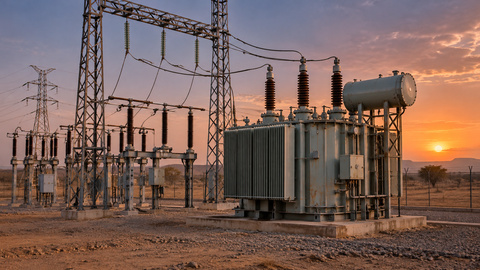
Drone Attacks Deepen Sudan’s Power Crisis, Threatening Hospitals and Water Supplies

Drone attacks on electrical substations in Sudan have cut electricity to communities in northern and eastern states. Strikes on November 1 disabled facilities in Al-Dabbah and Abu Hamad; local sources reported additional November 2 attacks in Aroma and New Halfa. Sudanese rights group Emergency Lawyers says approximately 15 substations have been targeted since early October. Sudanese authorities blame the Rapid Support Forces (RSF), but responsibility for each strike should remain attributed rather than treated as independently proven. Hospitals, water pumps, food systems and agriculture face serious disruption.

3 min read
Daily Headlines

False Nuclear Alerts Spread After Emergency Apps Are Hacked in Ukraine and Russia

Late November 1 and early November 2, public emergency-warning mobile applications in Ukraine and Russia distributed false alerts about nuclear or radiation danger after separate reported cyberattacks. Ukrainian users saw warnings about radiation, chemical threats and street fighting; officials said there was no such radiation emergency and temporarily suspended the affected app before restoring it. Russia’s Emergency Situations Ministry also reported false notices through its app while saying other alert channels continued operating. No verified evidence connects the attacks or establishes a perpetrator.

3 min read
Daily Headlines

Iran Offers Two-Day Path to Reopen Strait of Hormuz, but U.S. Agreement Remains Unresolved

On November 2, Iran said its proposed sequence for reopening the Strait of Hormuz could be compressed into two days if Washington accepted Tehran’s demands, including ending the U.S. naval blockade. Iranian negotiators had left Doha on Sunday; an official briefed on the mediation said a draft proposal was circulating and further talks were possible. The strait has not reopened under a new agreement, and there is no confirmation that the United States has accepted Iran’s conditions. The dispute matters because the maritime route affects energy supplies and regional security.

3 min read
Daily Headlines

Separate Halloween Weekend Shootings Leave Deaths and Dozens of Injuries Across U.S.

Shootings during the Halloween weekend left people dead and dozens wounded in multiple U.S. cities. In Dallas, police reported four deaths and at least 15 injuries across three separate incidents in the Deep Ellum entertainment district early November 1; officials said there was no information showing those shootings were related. An Associated Press roundup on November 1 counted at least six deaths in its then-identified incidents, while a broader CNN tally on November 2 reported more than a dozen deaths and over 90 injuries. Those totals have different scopes and remain subject to updates, not a single official nationwide count.

3 min read
Daily Headlines

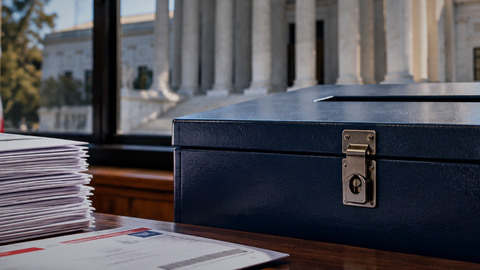
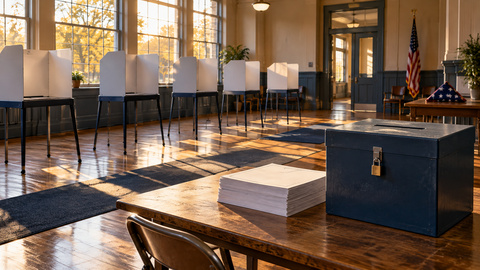
More than 52 million Americans have voted as Trump campaigns in closely contested Senate states

More than 52 million Americans have cast early votes in person or by mail, according to University of Florida Election Lab figures cited by Reuters on November 1. President Donald Trump is campaigning in Iowa and Kansas, historically Republican-leaning states where Senate races have tightened. All 435 House seats and 35 Senate seats are on the ballot November 3. Early voting totals describe participation, not how voters voted or who will win.

2 min read
Daily Headlines

Poland’s constitutional court crisis deepens after disputed suspension of tribunal president

Poland’s government backed a move to suspend Constitutional Tribunal president Bogdan Święczkowski, arguing he obstructed judges appointed by the parliamentary majority. President Karol Nawrocki and opposition figures dispute the legality of the action, while Prime Minister Donald Tusk says decisive steps are needed to restore lawful judicial independence. Demonstrators gathered outside the court, and police reported detentions after confrontations. The dispute rests on years of contested judicial appointments and competing interpretations of constitutional authority.

2 min read
Daily Headlines

Taiwan says Chinese coast guard patrols harass shipping east of the island

Taiwan’s Coast Guard says two Chinese coast guard ships patrolling off Taiwan’s eastern coast asserted jurisdiction through radio messages and that Taiwanese vessels monitored them. Beijing describes its operations as routine law enforcement in waters it claims. Taiwan rejects that claim and warns repeated patrols could serve to normalize restrictions on a maritime route essential to supply operations. These concerns are assessments, not proof of a planned blockade.

2 min read
Daily Headlines

United Nations demands investigation after staff member dies in Houthi custody in Yemen

The United Nations reported October 31 that Mohammad el Shami, an employee of its human rights office, died while held by the Houthi de facto authorities in Yemen. He had been detained since June 6, 2024. The UN says it received no proof of life during his detention and has no reliable explanation for his death. It demands an impartial investigation and the release of other detained personnel. The Houthis control Sanaa and much of northwestern Yemen, but are not Yemen’s internationally recognized government.

2 min read
Daily Headlines

United States reviews proposals for limited Black Sea shipping ceasefire

At the October 31 G20 foreign ministers meeting in Atlanta, Secretary of State Marco Rubio said the United States was reviewing proposals—particularly from Turkey and suggestions from India—for arrangements that could help safeguard Black Sea grain and energy shipments. Rubio characterized the diplomatic climate as growing interest, not momentum toward a deal, and made no claim a ceasefire had been reached. Canada’s foreign minister said Russia had not shown willingness to proceed. A shipping arrangement would not end the broader Russia–Ukraine war.

2 min read
Daily Headlines

ACA benchmark premiums rise 13% for 2027 as enrollment approaches

KFF reports average finalized benchmark Silver-plan premiums for 2027 rise 13%, amid changes in eligibility and subsidies. A benchmark premium is not the same as a household’s net monthly bill. Geography, age, plan selection and premium tax-credit eligibility determine what consumers actually pay.

2 min read

A LASTING HOME FOR THE WORK

More than a headline.
A fuller record.

Created and edited by Todd Russell, The Russell Record began on Facebook as The Full & Fair Record. The name is changing; the purpose remains: help readers understand the evidence and reach their own conclusions.

Facebook remains a place to discover the articles and discuss them. This website is their organized, lasting home.

The Russell Record mastheadThe Russell Record — Full & Fair Reporting

Our approach

Document what happened. Examine the evidence. Consider meaningful counterarguments and legitimate criticism. Distinguish facts from claims, analysis, and opinion.

Public figures & the record

Look beyond the party label. What has a person done? What changed as a result? What deserves credit, what warrants scrutiny, and what remains unresolved?

Editorial responsibility & corrections

Todd selects the subjects and provides editorial direction, review, and editing, with AI assistance in research and drafting. Responsibility for publication remains with the editor. Questions, corrections, substantive disagreement, and additional evidence are welcome.

Reading & privacy

This site does not add advertising scripts, analytics services, or social-media tracking widgets. Your browser can remember your preferred article text size on this device. Hosting providers may maintain ordinary server access logs. External source and Facebook links have their own privacy practices.

The purpose is to inform your judgment—not make it for you.

The Russell Record
A custom editorial illustration and large headline for Facebook Moderation: Protection, Overreach and Reach

Issues & Policy

The Decisions & Their Consequences

Facebook Moderation: Protection, Overreach and Reach

Technology & speech · What Meta removes, demotes and recommends.

The essential context

Meta faces real safety risks—from scams and incitement to coordinated disinformation—but moderation can also restrict lawful speech. Reduced distribution is not the same thing as content deletion, and low view counts alone do not establish intentional suppression.

This is an editorial perspective. Its proposed standards and interpretations are arguments to evaluate, not existing law or established motive.

What the latest evidence clarifies

Independent Oversight Board findings substantiate examples of moderation overreach. The article’s account of individual Russell Record reach figures is an anecdotal observation, not a platform audit or proof of punitive distribution.

An editorial graphic highlighting three key aspects of Facebook Moderation: Protection, Overreach and Reach
Russell Record editorial graphic; see the linked primary sources and reporting notes.

The full record

Facebook Censorship: The Good, The Bad & The Ugly

When protecting the public becomes deciding what the public gets to see “Censorship” is a loaded word.

On Facebook, it does not always mean deleting a post or banning an account.

Sometimes content is removed. Sometimes it is labeled or demoted. And sometimes it remains completely available on Facebook — but Meta’s systems simply stop recommending it to very many people.

That raises a difficult question with no easy answer

How much responsibility should Meta take for protecting billions of users from dangerous or false information — and at what point does that protection give one private company too much control over what the public gets to hear?

First, The Case For Moderation

It is easy to criticize Facebook after a moderation decision turns out to be wrong. But Meta faces a genuine problem.

Billions of people can publish information almost instantly. False medical claims can spread during an epidemic. Fabricated reports during a war can inflame populations or endanger lives. Terrorist organizations can distribute propaganda. Foreign governments can create fake accounts pretending to be ordinary Americans. Innocent people can be targeted with false accusations that spread around the world before the truth catches up.

Doing nothing is also a choice — and sometimes a dangerous one. COVID provides a good example.

During a rapidly developing global health emergency, Facebook worked with health authorities to restrict information it believed could endanger people.

There is nothing inherently sinister about that goal.

If someone falsely claims that a dangerous substance cures a deadly disease, or spreads demonstrably false information likely to discourage lifesaving treatment, a platform reaching billions of people has a reasonable argument that it should not simply amplify the claim without restraint.

Meta was trying, at least in part, to protect public health.

The problem came when uncertain or disputed questions were sometimes treated as though the truth had already been conclusively established.

When Protection Becomes Overconfidence

In February 2021, Facebook prohibited claims that COVID-19 had been man-made or manufactured.

Three months later, as investigations into the virus’s origin continued, Facebook reversed that policy and allowed the subject to be discussed again.

That illustrates the danger. Science develops. Evidence changes. Experts disagree. Governments can be wrong.

And information considered misinformation today can sometimes become a legitimate subject of investigation tomorrow.

Meta was confronting an enormous public-health emergency, and much of its moderation may have been well-intentioned.

But good intentions do not make a moderator infallible.

That is especially important when the moderator can determine whether millions of people ever encounter an opposing argument.

Meta Is Not The Government

There is also an important legal distinction. Facebook is owned by Meta, a private company.

The First Amendment primarily restricts government censorship, not the editorial decisions of private companies.

The Supreme Court has recognized that social-media companies themselves possess significant First Amendment rights when deciding what material their platforms will carry, recommend, label or demote.

So Facebook removing a post is not automatically a violation of a user's First Amendment rights.

But the constitutional issue becomes much more serious when government officials pressure a private company to suppress speech the government itself could not legally prohibit.

That is where the COVID controversy became particularly important.

Government Pressure

In 2024, Mark Zuckerberg acknowledged that senior Biden administration officials had repeatedly pressured Meta regarding COVID-related content, including humor and satire.

Zuckerberg said the pressure was wrong and acknowledged that Meta had made some decisions it would not make again.

A federal appeals court had previously concluded that certain government officials likely crossed constitutional lines by coercing or significantly encouraging social-media moderation.

The Supreme Court later threw out the injunction because the plaintiffs had not established the legal standing necessary to obtain it.

The Supreme Court did not issue a final ruling declaring all of the government's conduct constitutional.

The episode shows why the distinction matters. Meta has broad authority to make its own moderation decisions.

Government secretly or aggressively influencing those decisions is a different matter.

The Hunter Biden Laptop: An Understandable Concern — And A Cautionary Example

Shortly before the 2020 presidential election, Facebook reduced distribution of New York Post reporting concerning Hunter Biden's laptop while the material was being evaluated.

The instinct behind caution is not difficult to understand.

A major platform should be concerned about spreading potentially fabricated information about an individual.

It should be especially cautious if intelligence agencies are warning that foreign adversaries may attempt to inject false material into an American election.

Political campaigns can also generate vicious and sometimes false accusations against candidates, their families and private citizens.

There is value in refusing to amplify a potentially damaging allegation before knowing whether it is genuine.

But there is another danger. Facebook reduced the story's distribution for seven days.

The reporting was not ultimately established to be Russian disinformation, and Zuckerberg later said Facebook should not have demoted it.

So the question becomes

Who gets to decide when an allegation is too questionable for the public to see widely — particularly when it involves an election?

Protecting people from false accusations is a legitimate objective. Protecting them from legitimate scrutiny is something very different.

Determining which is which can be extraordinarily difficult.

Donald Trump And January 6

Facebook suspended Donald Trump following January 6, 2021. Again, the situation was not simple.

Meta believed there was a genuine risk of additional violence during an extraordinary national event.

Its independent Oversight Board agreed that temporarily suspending Trump was justified under the circumstances.

But the Board also criticized Facebook for imposing an indefinite punishment that did not exist under its established rules, describing the penalty as “indeterminate and standardless.”

That may be one of the clearest examples of the larger dilemma. A platform may sometimes need to act quickly to protect public safety.

But even emergency decisions need understandable standards.

Otherwise extraordinary powers created for extraordinary situations can gradually become ordinary powers.

War Makes The Problem Even Harder

The Middle East demonstrates why some content moderation is not only understandable but probably unavoidable.

False reports during a war can provoke violence. Propaganda can recruit supporters. Graphic material can traumatize users.

Information about hostages or military operations can potentially endanger lives. Governments, terrorist groups and foreign intelligence services can all manipulate social media.

Following the October 7 attacks and the Israel-Hamas war, Meta openly said it strengthened its systems to avoid recommending potentially violating and “borderline” material.

It temporarily lowered the threshold at which its technology would decide not to recommend certain content.

There is a legitimate public-safety argument for doing that. But there is also a danger.

A lower threshold inevitably increases the chance that legitimate reporting, political speech or peaceful advocacy gets caught in the same net.

Is Meta Taking Sides?

The evidence is more complicated than either political camp might expect.

Meta commissioned an independent investigation of its handling of the 2021 Israel-Palestinian conflict.

The investigation found no evidence that Meta intentionally designed its policies to favor Israelis, Palestinians, Jews or Arabs.

That is important.

But the investigation also found that Meta's enforcement had unintentionally harmed the freedom of expression of Palestinian and Arab users.

Arabic content sometimes suffered from over-enforcement.

At the same time, some Hebrew-language content involving incitement against Israelis or Jews was under-enforced.

In other words, mistakes occurred in both directions. That suggests something more complicated than a simple corporate conspiracy.

Bias can arise from automated systems, language differences, cultural assumptions, training data, incomplete information and policies that affect one community differently from another.

The effect can still be unfair even when the unfairness was not intentional.

One Word, Millions Of Consequences

A particularly revealing example involved the Arabic term “shaheed,” often translated as “martyr.”

Meta's Dangerous Organizations policies caused certain uses of the term to be removed so frequently that Meta acknowledged it became responsible for more removals than any other single word or phrase under its Community Standards.

Meta's Oversight Board concluded that the policy unnecessarily restricted the expression of millions of Arabic-speaking and Muslim users.

Meta ultimately changed the approach. Again, there is an important distinction The original purpose — restricting praise for terrorism — is understandable.

The resulting overreach was not. Both things can be true.

And Now, Iran

That raises a question about The Russell Record’s own publishing experience. We recently published an article examining Iran's nuclear capability.

The article distinguished between possessing highly enriched uranium, being capable of producing weapons-grade material and actually possessing a completed nuclear weapon.

It did not argue that President Trump was right to attack Iran. It did not argue that he was wrong. It did not defend Iran.

It did not demonize Iran.

Its purpose was to explain what Iran possessed, what it was technically capable of doing and what remained uncertain.

Yet its Facebook distribution has been extraordinarily small.

A redesigned version using a more restrained graphic received only about 10 views during its first hour.

By comparison, several previous Russell Record Record articles have reached roughly 5,000 to 15,000 views.

That does NOT prove Facebook censored the Iran article.

Facebook distribution is notoriously unpredictable, and we have no access to Meta's internal ranking decision.

But it does raise a legitimate question.

Meta acknowledges that content can remain completely permissible on Facebook while still being excluded from broader recommendations.

So a post does not need to be deleted to become almost invisible.

The New Form Of Censorship May Not Look Like Censorship

This may be the most important issue of all. If Facebook deletes your post, you know what happened. If Facebook suspends your account, you know what happened.

If Facebook places a warning on your article, you can see it. But what happens when Facebook simply stops recommending it?

Was our Iran article limited because it concerned an active war? Because it contained words involving nuclear weapons and military conflict?

Because Meta's systems are deliberately cautious about Middle East material? Because of an unrelated ranking algorithm?

Or was nothing unusual done at all? We simply don't know.

That lack of transparency creates suspicion even when Meta may have an entirely reasonable explanation.

To Meta'S Credit, It Has Acknowledged Some Of These Problems

Meta has not simply denied that over-moderation ever occurred. In 2025, the company substantially changed its approach.

It ended traditional third-party fact-checking in the United States and began moving toward Community Notes.

Meta said its previous systems had produced too many mistakes, restricted legitimate political debate and sometimes turned a program intended to inform people into what the company itself called “a tool to censor.”

It also shifted automated enforcement toward the most serious categories — including terrorism, child exploitation, fraud, scams and illegal activity — while reducing automatic intervention for less severe violations.

Meta later reported that enforcement mistakes in the United States declined substantially. That deserves recognition.

Large systems make mistakes. Recognizing those mistakes and changing course is preferable to refusing to acknowledge them.

The Good

Meta operates communications platforms with billions of users. It has legitimate reasons to combat

  • Terrorist recruitment
  • Direct threats and incitement
  • Dangerous medical misinformation
  • Fraud and scams
  • Foreign influence operations
  • Coordinated fake accounts
  • Deliberately fabricated media
  • Information that could put hostages or civilians in immediate danger

Responsible moderation can protect people. It can also improve the quality of information available online.

The Bad

The same tools can suppress legitimate speech. Algorithms do not always understand context. Experts can be wrong.

Fact-checkers can have biases. Government agencies can exert pressure.

A rule designed to stop terrorism can accidentally suppress ordinary political or religious language.

A policy intended to protect someone from a false accusation can also prevent legitimate reporting from reaching the public.

There is a very fine line between protecting the truth and deciding what the truth is.

The Ugly

The most troubling situation may be the one users cannot see. A lawful article remains online. No warning appears.

No rule violation is identified. But thousands of people who might otherwise encounter it never do.

When that happens, the publisher cannot challenge the decision because the publisher may never know a decision was made.

That gives a recommendation algorithm extraordinary influence over public discussion.

The Real Question Isn'T Whether Meta Should Moderate

It should.

A platform reaching billions of people cannot responsibly ignore terrorism, fraud, foreign manipulation, genuine threats and material likely to cause immediate harm.

The harder question is where moderation ends and control of the public conversation begins. Meta should not have to distribute everything equally.

But political viewpoint should not determine which lawful information gets an audience.

Governments should not be able to quietly pressure platforms into suppressing legitimate criticism.

And algorithms should not make consequential decisions about lawful public-affairs reporting without enough transparency for publishers and users to understand what happened.

Perhaps the best principle is relatively simple Protect people from demonstrable harm. Be humble about disputed truth.

Allow competing political viewpoints. Apply the rules consistently. And when lawful material is deliberately denied normal distribution, explain why.

That would not eliminate every argument about censorship. But it would make the enormous power of modern social media considerably more accountable.

What do you think?

Has social-media moderation generally made Facebook safer and more trustworthy — or have platforms become too willing to decide which lawful information deserves an audience?

And when Facebook deliberately limits the distribution of a legal political or public-affairs post, should the person who published it be told why?

Return to quick summary

Sources & reporting notes

  1. Meta Oversight Board — Trump suspension decision (May 2021)
  2. Meta Oversight Board — Changing the “shaheed” policy (July 2024)
  3. Meta Oversight Board — Background on its decisions and policy work

THE RUSSELL RECORD

Curated & Edited by Todd Russell • AI-Assisted Research & Drafting

Back to the article library