What authorities announced
British counterterrorism police arrested a 41-year-old U.S. Army member near Gloucester, England, on Tuesday, November 10, 2026. Their announcement describes suspicion of offenses under Sections 1 and 3 of the United Kingdom's National Security Act 2023. Police said the country to which the allegations relate is Russia.
U.S. Army public affairs reproduced the British police statement and confirmed cooperation among British investigators, the FBI and the U.S. military. The suspect remained in custody at a London police station when the announcement was released. Officers were searching two locations in Gloucestershire.
The person's name was not released. Public authorities did not disclose what protected information, if any, was obtained, whether anything was transmitted to a foreign service, or whether formal criminal charges would follow. The public account is an arrest and active investigation, not a conviction.
Who and what are involved?
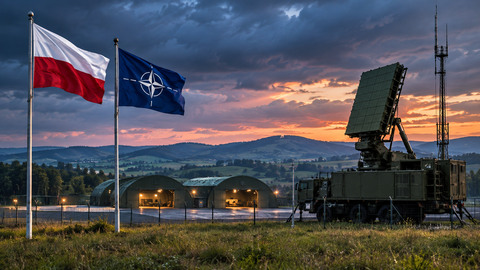
The Associated Press reported that the man was assigned to NATO's Allied Rapid Reaction Corps, a multinational military command based in the United Kingdom. The military organization and any access a person might have there make an insider-security investigation significant, but association with a NATO unit does not establish that sensitive NATO secrets were compromised.
Britain's National Security Act 2023 contains offenses relating to activities that can benefit foreign powers and to obtaining or disclosing protected information. The particular sections cited by police identify the legal categories being investigated. They do not, by themselves, prove that the required elements of either offense occurred.
What the authorities have said
Deputy Assistant Commissioner Vicki Evans, Britain's senior national coordinator for counterterrorism policing, said the investigation required close UK–U.S. collaboration and that inquiries were ongoing. FBI Director Kash Patel described the allegations as a serious counterintelligence matter, while the U.S. Army Counterintelligence Command stressed the risk posed by alleged insider misconduct.
Those officials were responding to an investigation. Their remarks should not be read as a judicial determination about the suspect's conduct. The FBI also reported broader counterintelligence enforcement figures, but those aggregate counts are not evidence in this individual's case.
British police specifically said this investigation was not connected to other current counterterrorism inquiries. It should not be conflated with separate reported security threats involving American bases in Britain or with unrelated allegations involving Iran.
Why the military setting matters
Members of armed forces and allied headquarters can encounter operational plans, personnel information, communications, logistics arrangements and other sensitive material. Modern counterintelligence therefore includes access controls, classified-information rules, internal reporting channels, auditing and coordination among governments.
If investigators establish that someone abused trusted access, a case could expose vulnerabilities worth correcting. If the allegations are unsupported, the investigation must not be presented as confirmed espionage. Public reporting alone does not answer which outcome will follow.
What remains unanswered
Authorities have not publicly established the suspect's identity, precise rank and duties, the nature of any protected material, whether a foreign service received information, or the eventual charging decision. Further evidence could come through a police update, court filing or official military announcement.
The appropriate immediate conclusion is narrower than the alarming headline might suggest: an American service member has been arrested in a serious Russia-linked national-security investigation, but the underlying allegations remain unproven.