The vote in Ankara
Turkey’s parliament voted 279–119 on Thursday, November 5, 2026, to approve ratification of a trilateral defense agreement with Saudi Arabia and Pakistan, according to Anadolu Agency. The approval was reported Friday and clears the Turkish legislative stage for the pact signed by the three governments in August.
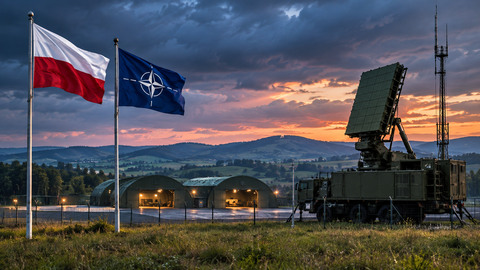
The measure is commonly called the Mecca Joint Defense Agreement. It is a security agreement among three sovereign countries; it is not an expansion of NATO and does not by itself bring Saudi Arabia or Pakistan into the Atlantic alliance.
What the pact provides
According to the Associated Press, the pact establishes a defense partnership planned for 10 years and treats an external attack on one participating state as an attack on all three. It also provides for intelligence sharing, military cooperation, defense-industry ties and joint deterrence.
Those commitments are consequential, but their practical scope depends on how each country interprets and implements the agreement. A collective-defense clause is not the same thing as a verified decision to deploy soldiers to a particular conflict today.
What its supporters say
Supporters in Turkey’s governing Justice and Development Party said the agreement is designed to prevent conflict and strengthen regional security, not to threaten any third state. Officials from the participating governments similarly say the arrangement does not specifically target Iran.
From this viewpoint, a clearer commitment to cooperate could raise the costs of attacks and improve information-sharing among countries facing different security challenges.
What opponents are concerned about
Opposition lawmakers questioned whether the agreement’s terms were sufficiently clear, how commitments would be reviewed by parliament and whether they could conflict with Turkey’s other international obligations. Critics fear a loosely defined mutual-defense commitment could entangle Turkey in confrontations beyond its borders.
Government officials say any deployment of Turkish troops would still require separate parliamentary authorization. That qualification matters: the parliament ratified the agreement, but did not thereby approve a specific military operation.
The regional setting
Saudi Arabia has been confronting security threats from Houthi attacks launched from Yemen, while the broader U.S.–Iran confrontation has disrupted energy markets and maritime security. Pakistan is a nuclear-armed regional power, and Turkey is a long-standing NATO member with its own defense industry and security interests.
The pact could diversify Saudi security ties beyond its relationship with Washington, while giving Turkey and Pakistan additional opportunities for joint training, procurement and intelligence cooperation. Those possibilities are not proof that an alliance will produce immediate policy change or military intervention.
Next steps and unanswered questions
The parliaments and governments involved will have to implement the arrangement through their respective procedures. Details about joint command arrangements, funding, force commitments and conflict scenarios were not established by the ratification vote alone.
Its real-world consequences will depend on subsequent statements, budget decisions, military cooperation and whether it reduces or heightens regional tensions. The clearest established result today is Turkey’s 279–119 ratification vote.