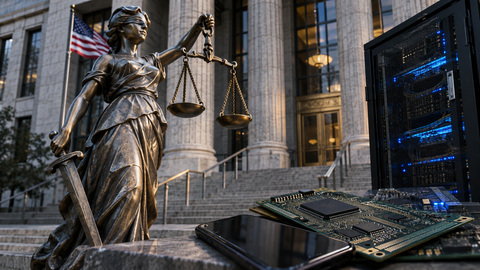
A jury verdict in a long-running case
A federal jury in Brooklyn on November 24 convicted Chinese telecommunications equipment maker Huawei Technologies and three subsidiaries in a case alleging schemes involving Iran-related sanctions, false statements to banks and the theft of U.S. company trade secrets. The federal district court proceedings followed roughly twelve weeks of trial testimony.
The corporate defendants included Huawei Technologies, Huawei Device, Futurewei Technologies and Huawei Device USA. The Justice Department said one or more of the entities was convicted on offenses including bank and wire fraud, violations of the International Emergency Economic Powers Act, conspiracy to steal trade secrets and money laundering conspiracy.
Not every charge resulted in a conviction
Reuters reported that the Huawei parent company was convicted on 10 of the 12 counts it faced, while jurors acquitted it on racketeering conspiracy and conspiracy to obstruct justice. That distinction matters. The prosecution succeeded on major parts of its case, but the verdict was not a guilty finding on every allegation or for every defendant on every charge.
U.S. prosecutors argued that Huawei concealed its relationship with Skycom, an Iran-related business, and misled financial institutions about activities that implicated American sanctions. They also presented evidence of alleged efforts to obtain confidential designs and technology from U.S. rivals. DOJ described the criminal conduct as extensive, but readers should distinguish what the jury established from the government's broader commentary on Huawei's international business.
Huawei's response and the remaining process
Huawei said the surviving charges lack legal and factual merit. Defense counsel cited acquittal on the racketeering charge as support for the company's claim of a good-faith compliance culture, while disputing prosecutors' depiction of incidents spanning many years as a single conspiracy. Huawei said it plans to appeal. China's foreign ministry criticized what it characterized as American suppression of Chinese companies.
The sentencing hearing was reported as scheduled for September 14, 2027. The corporate defendants face potential fines, forfeiture and restitution; no specific final penalty can be assumed before the judge rules and post-trial proceedings unfold.
Why the case matters beyond the courtroom
Huawei is a large player in telecommunications infrastructure and a focal point in years of U.S.–China disputes over technology, national security and market access. The case arose in the context of American restrictions on Huawei's access to U.S. technology, which began before this verdict. The verdict may sharpen diplomatic and commercial tensions but does not automatically shut down Huawei's global operations.
The case also illustrates the difference between a criminal jury's findings and a government's broader security-policy judgments. Readers can acknowledge serious guilty findings while examining defense arguments, the two acquittals and the appellate process.
What comes next
Post-trial motions, sentencing and likely appeals are the legal milestones to follow. The most accurate status on November 25 is convicted on multiple counts, acquitted on two, not yet finally sentenced, and intending to appeal.